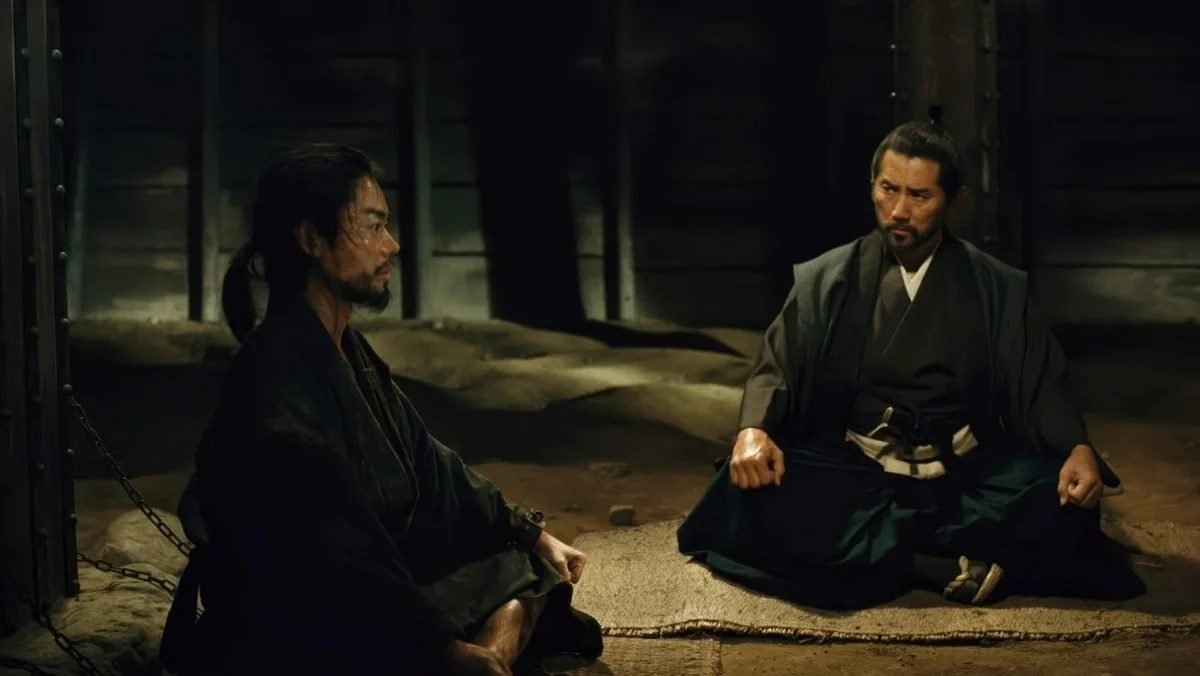
Most people in the west know Japanese filmmaking legend Kiyoshi Kurosawa for his horror films, like 1997’s Cure and 2001’s Pulse. He continued to make horror films thereafter, but he has made movies in all sorts of genres, though usually dealing with similar dark, troubling, pseudo-supernatural themes. For Kurosawa’s first period-set film, The Samurai and the Prisoner, he offers a somber treatise on war and cruelty in the guise of a whodunit mystery. It works incredibly well.
It’s interesting to see Kurosawa outside the confines of modern Japanese life. The isolation of modernity is a current theme in almost all of his works, regardless of tone. But despite this movie taking place in the 16th century and using real historical figures, The Samurai and the Prisoner has a surprisingly apocalyptic feel throughout, as though the world outside of Arioka Castle is on the cusp of non-existence. And inside the castle isn’t much safer.
The story of The Samurai and the Prisoner follows Araki Murashige, the merciful lord of Arioka Castle, who is in open rebellion against the brutal warlord Oda Nobunaga. Oda sends armies to attack the heavily fortified castle, and Araki’s generals all believe they’ll be untouched. However, part of this rebellion has to do with Araki bucking against established samurai rules. Chief among them, the killing of prisoners. Early in the film, Araki receives an envoy from Oda, the brilliant strategist Kuroda Kanbei (Masaki Suda), but rather than allow him to return to Oda, nor kill him in defiance, he places the man in the dungeon. This is simply not done, and many believe it is a bad omen.

The omens get worse as various crimes occur within the castle walls, including murder, the disfiguring of captured heads, and stealing of invaluable urns. In each case, the transgressions seem to be divine retribution, though Araki refuses to believe such things. Eventually, through his discussions with his brilliant wife (Yuriko Yoshitaka) and indeed with Kanbei in the dungeon, Araki deduces various truths about the people under his care and what rebelling against the establishment really means.
Kurosawa’s strength has always been allowing his scenes to breathe and the pace to remain languid as much as possible. The Samurai and the Prisoner takes its time, and stories and characters unfold deliberately and reservedly. We have a few battle sequences here, but none are sensationalized; instead, they are allowed to feel needlessly violent and perfunctory. Araki continually hears that he needs to kill people to remain strong in people’s eyes. Araki, conversely, thinks it’s a waste of humanity to do so. But this leads to issues that threaten his rule and the safety of his people. Idealism versus surety.

At times, The Samurai and the Prisoner feels like a stage play. Most of the action stays in the environs of the inner castle walls for the majority of the runtime. The movie is even shot in the traditional square Academy ratio rather than widescreen. It helps to accentuate the high walls while everything outside remains a mystery. Kurosawa also surrounds Araki with dozens of other characters, underlings and servants and peasants, to add to the tension of who, if anyone, he can really trust. It’s the perfect setup for a movie like this.
This movie hearkens back to the best of Japan’s classical Jidaigeki or “period dramas” but with a distinct sense of Kurosawa’s particular brand of ennui. The characters of The Samurai and the Prisoner are stoic yet relatable, and we spend enough time with our mains to begin to like them, worry about them, and identify with their plight. This is not in any way an action movie, but it is a pretty violent movie. However, the violence, as in the director’s earlier films, is there to shock and dismay.
The Samurai and the Prisoner is a thoughtful, troubling, and compelling mystery with an inescapable mix of wonder and dread. It stands as yet another late-period achievement for one of Japan’s most interesting filmmakers.
The Samurai and the Prisoner ⭐ (4 of 5)
The Samurai and the Prisoner is in select cities now.
Kyle Anderson is the Senior Editor for Nerdist. He hosts the weekly pop culture deep-dive podcast Laser Focus. You can find his film and TV reviews here. Follow him on Letterboxd.
This post has affiliate links, which means we may earn advertising money if you buy something. This doesn’t cost you anything extra, we just have to give you the heads up for legal reasons. Click away!
The post THE SAMURAI AND THE PRISONER Is a Fascinating, Somber Mystery appeared first on Nerdist.
This articles is written by : Fady Askharoun Samy Askharoun
All Rights Reserved to Amznusa www.amznusa.com
Why Amznusa?
AMZNUSA is a dynamic website that focuses on three primary categories: Technology, e-commerce and cryptocurrency news. It provides users with the latest updates and insights into online retail trends and the rapidly evolving world of digital currencies, helping visitors stay informed about both markets.
