At a glance
Expert’s Rating
Pros
- File, image, and system backup
- One-way sync and disaster recovery
- Doesn’t cost a dime
- Easy to learn and use
Cons
- Purchase nags
- Problematic recovery disk creation and boot
- Minor interface foibles
Our Verdict
The startlingly capable Standard version of Aomei Backupper will meet most users’ needs for zero coin and only a few “buy me” nags. But the boot media is difficult to create and requires lowering BIOS security standards.
Price When Reviewed
This value will show the geolocated pricing text for product undefined
Best Pricing Today
Price When Reviewed
Free
Best Prices Today: Aomei Backupper Standard
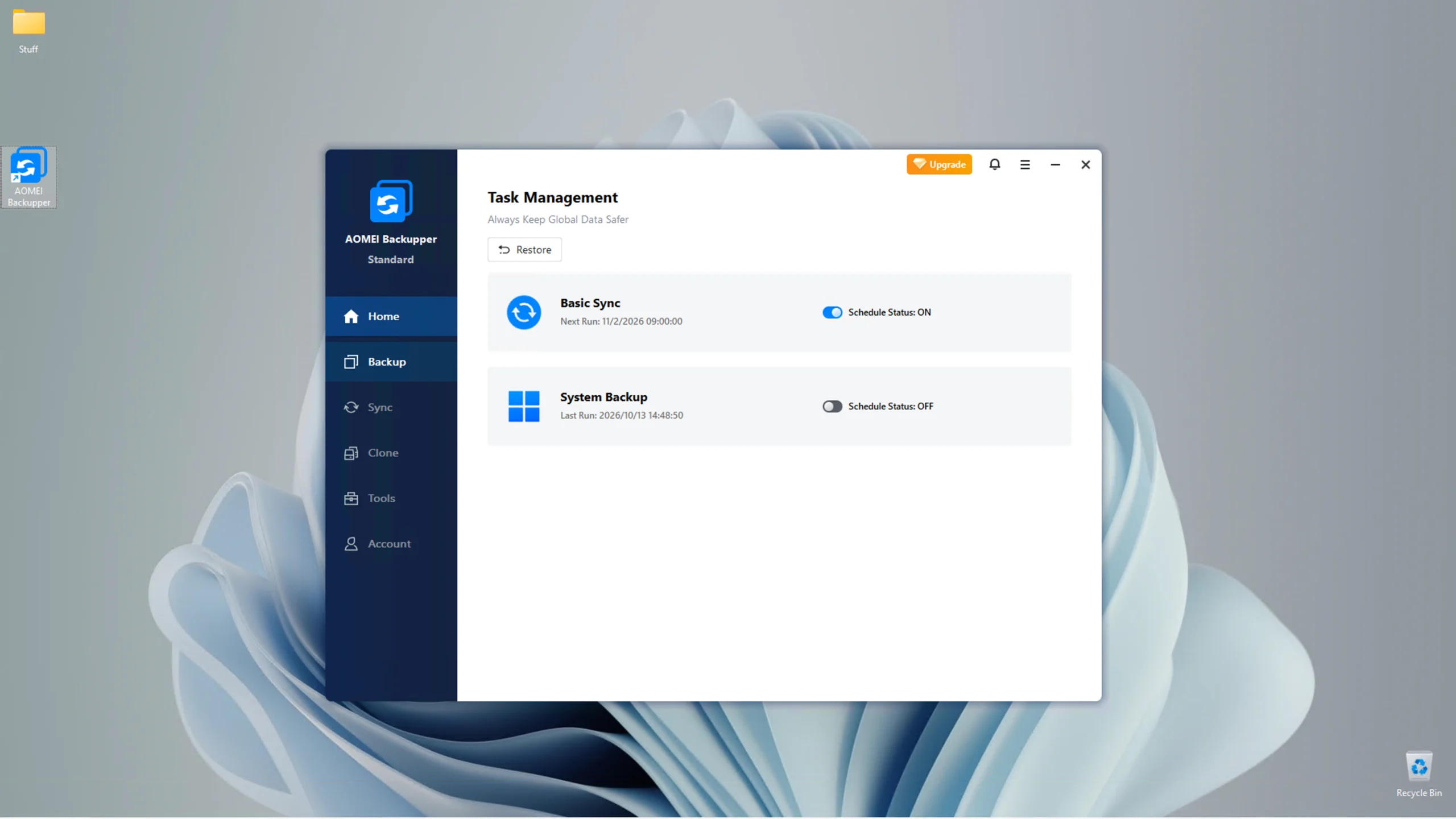
To keep essential data backed up, most users can easily get away with using Windows integrated File History, and various freebies. One of the shining lights among said freebies is Aomei’s Backupper Standard.
Windows’ own disaster recovery options aren’t particularly easy or reliable, hence the boon of a program such as Aomei Backupper Standard that facilitates free and reliable system recovery.
Alas, Backupper Standard needed a bit of help. I had to employ the venerable and equally free third-party boot-disk creation tool (Rufus 4.8) to create Backupper recovery media that would boot successfully on my test systems. Consider that worthy utility a necessary adjunct to Backupper Standard.
Read on to learn more, then see our roundup of the best Windows backup software for comparison.
What are Aomei Backupper Standard 8.5’s features?
I did a comprehensive comparison of Backupper Standard and Backupper Professional (before I discovered the cheat sheet) to discern which features were and were not implemented in the Standard version.
I was quite surprised at the overall functionality that’s included. All the basics from the paid version are there: file/folder backup, system/drive/partition imaging, one-way sync with the ability to schedule all of them.
Incremental and differential backup are supported, as is disaster recovery. Though, as mentioned, I ran into a bit of an issue creating the PE recovery disk (Linux is no longer offered). Ultimate success was mine, but read the performance section carefully for clues on how.
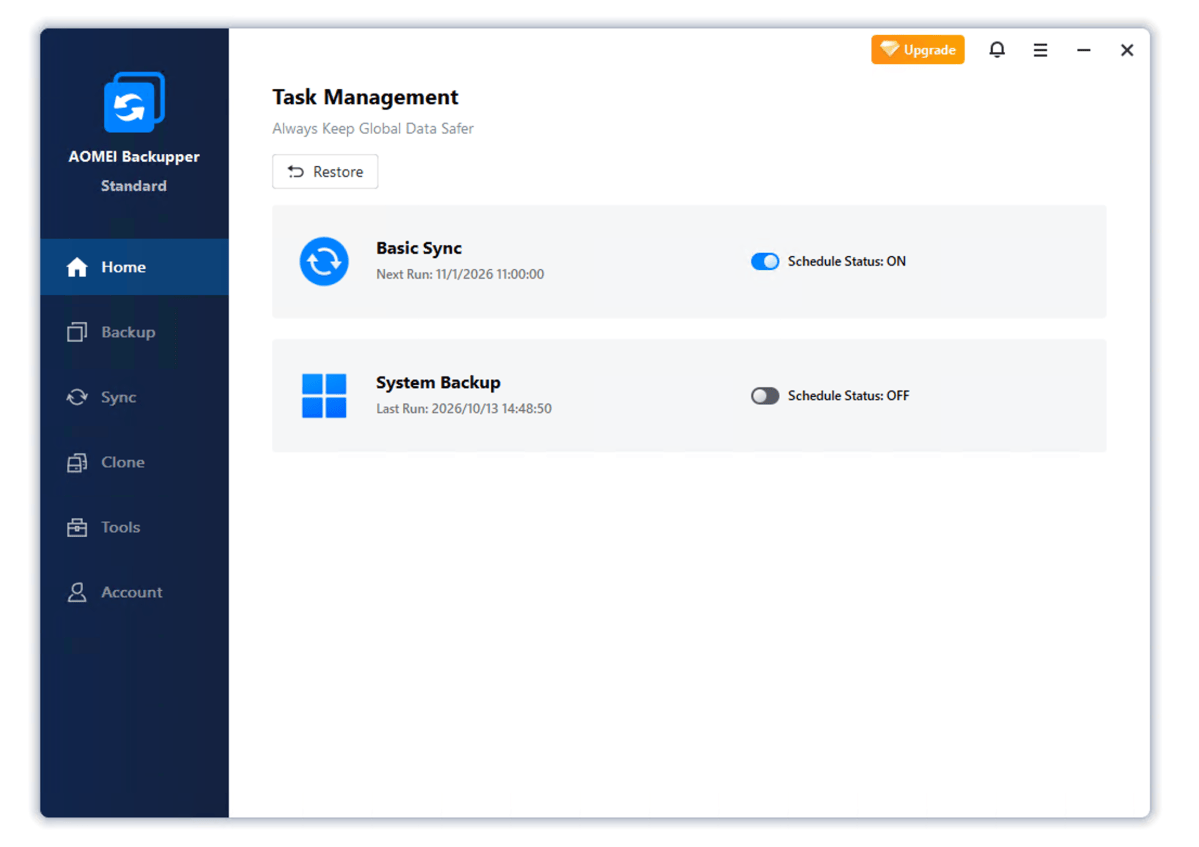
Backupper Professional features that are missing in Standard include: mirroring, two-way, and real-time sync; culling of backups (removing old unneeded files to make room for more); system clone and partition functions; as well as advanced features like the recovery environment (a hidden partition on your main drive that you can boot from to restore), PXE boot (network boot), command line usage, etc.
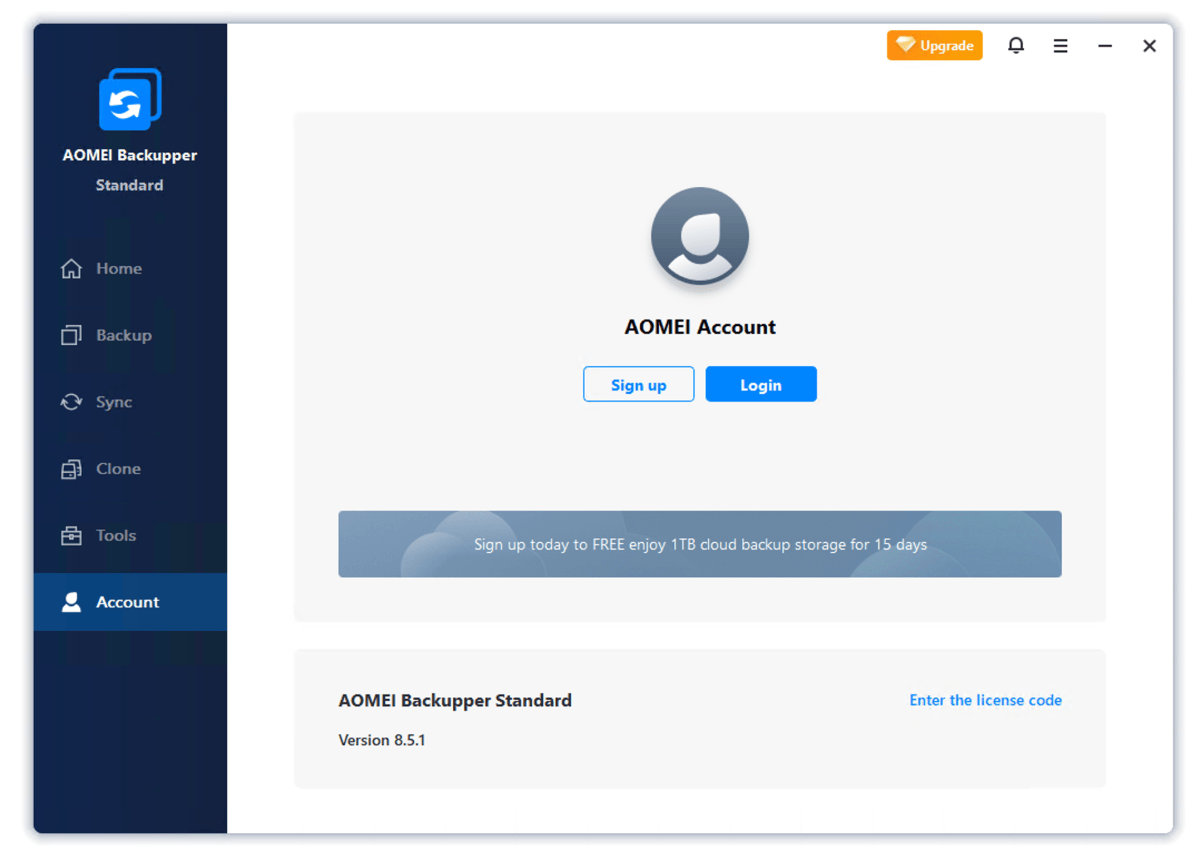
There’s also very affordable cloud storage with the paid version, but it can only be used for Backupper backups, not any other data. Those are all nice features for more advanced users, and if you like the sound of them, read my Aomei Backuppper Professional review.
That Aomei Backupper Standard costs you nothing but some time clicking through a nag upon exit is fantastic.
How much is Aomei Backupper Standard 8.5?
The only cost associated with Backupper Standard is a small banner ad at the top of the main Window, and a nag to buy the Pro version when you exit the client software. Really, that’s it.
Below you can see the retail and discounted prices of the Pro version you’ll see when you surf to the company’s website. Nicely, there’s a perpetual license available for Pro — something no longer available from industry heavyweights such as Acronis True Image and Macrium Reflect X Home.
Oddly, there is no mention of the 1TB of online storage (backup and restore only) that is offered with the paid versions for $20/$30 a year. You will find that when you open the “Buy” option from within the trial version of Backupper Professional.

Upgrade? To our mind, the Professional version of Backupper adds some nice features, but they’re not necessarily ones that most users need other than the online storage.
How does Aomei Backupper Standard 8.5 perform?
Backupper Standard ran glitch-free — at least with basic tasks. However, there were a number of non-fatal issues.
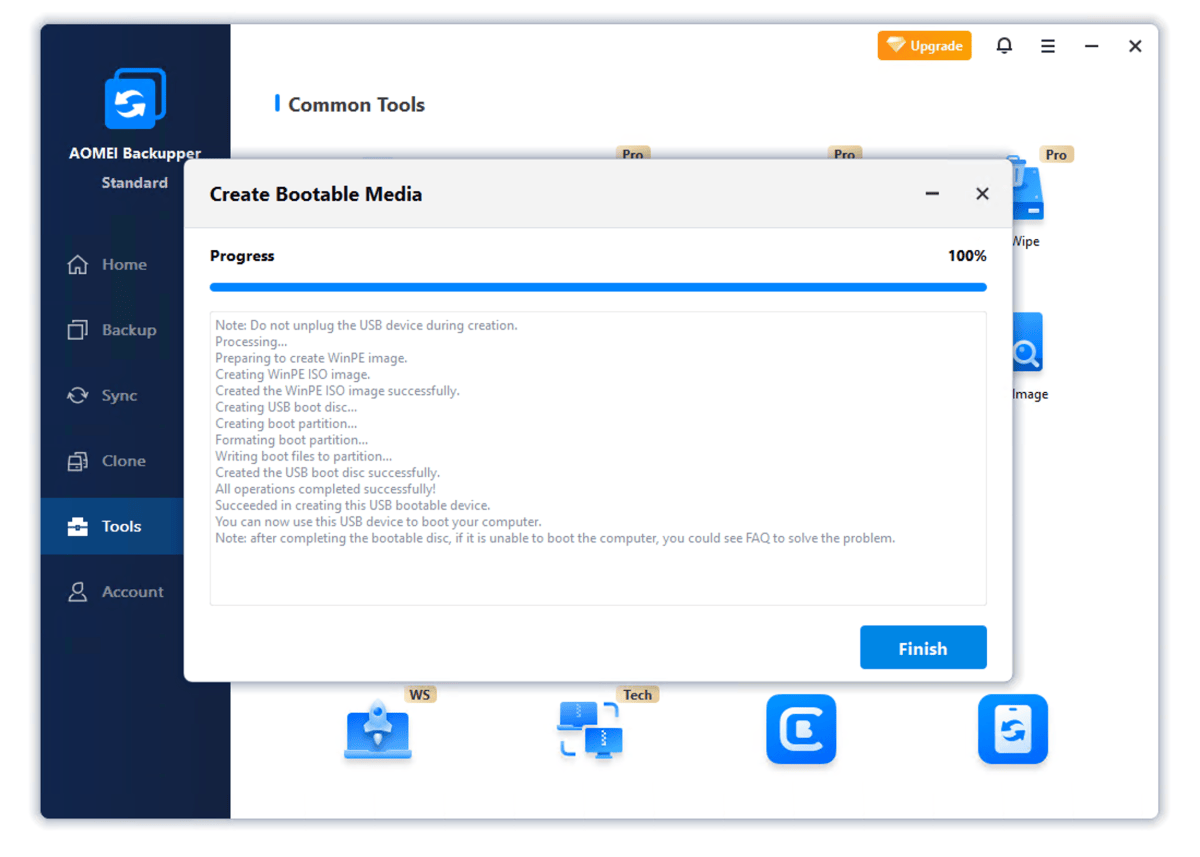
The major problem, as mentioned twice already, was creating a boot disk that would actually boot — a must-have for disaster recovery. Backupper created the Windows PE ISO just fine, and I was able to use it in VirtualBox, but the USB thumb drive it created did not show up as bootable on my UEFI test bed.
I managed to create a bootable USB stick with Rufus 4.8; however, the UEFI in the image was deprecated, so I had to lower the security settings in the BIOS to boot with it. Put bluntly, the recovery media feature is workable if you know the tricks, but hardly ideal.
Note that this same boot-disk creation issue plagues the Professional version and has been around since at least version 7. Come on, folks.
Once PE recovery media was successfully created, Backupper Standard performed better than fine. It’s not as fast as the Professional version, but it’s hardly slothful either.
Most importantly, it finished all backup and restore tasks without error — including a full system restore. I will forgive just about anything if the all-important backup and restore operations work properly.
While Backupper Standard restored my system just fine, I suggest you download Macrium Reflect 8 Free as a hedge.
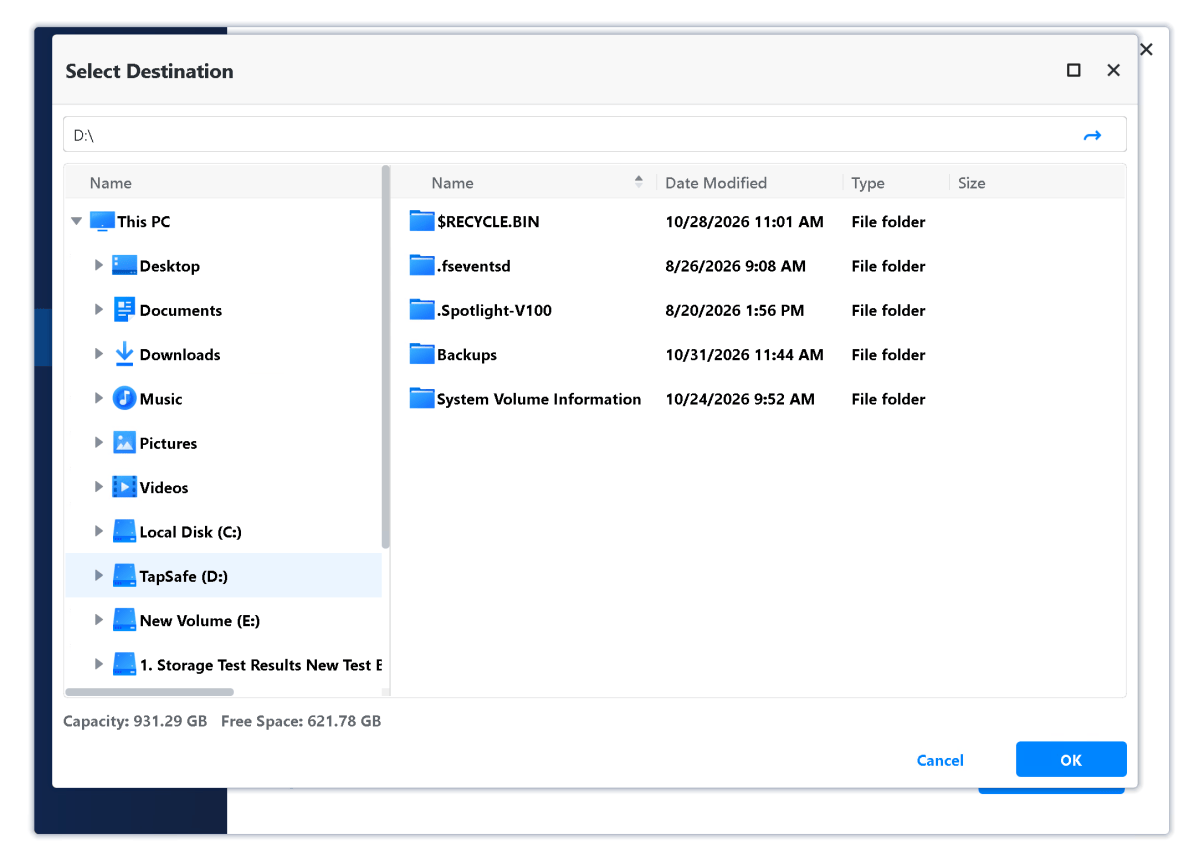
My only other, decidedly minor nits are the lack of a “new folder” button when defining some destinations (see above), and having to select network assets by typing in the IP address — there’s no browse function at the point.
After you supply the IP address, user name, and password, you can then browse the folders at that location using a standard expandable tree. Hmm.
Should you use Aomei Backupper Standard 8.5?
Backupper Standard is surprisingly full-featured and offers the reliable (once you manage to create the boot media) disaster recovery that Windows lacks. That it costs you nothing but some time clicking through a nag upon exit is fantastic.
However, be sure to create your recovery media (using Rufus) and test it before relying on it for disaster recovery. Also check out the free version of Easeus ToDo Backup or see if you can’t make do with Window’s own File History and the free version of Macrium Reflect.
The good news is that users have some solid freebie options to choose from.
This articles is written by : Fady Askharoun Samy Askharoun
All Rights Reserved to Amznusa www.amznusa.com
Why Amznusa?
AMZNUSA is a dynamic website that focuses on three primary categories: Technology, e-commerce and cryptocurrency news. It provides users with the latest updates and insights into online retail trends and the rapidly evolving world of digital currencies, helping visitors stay informed about both markets.
