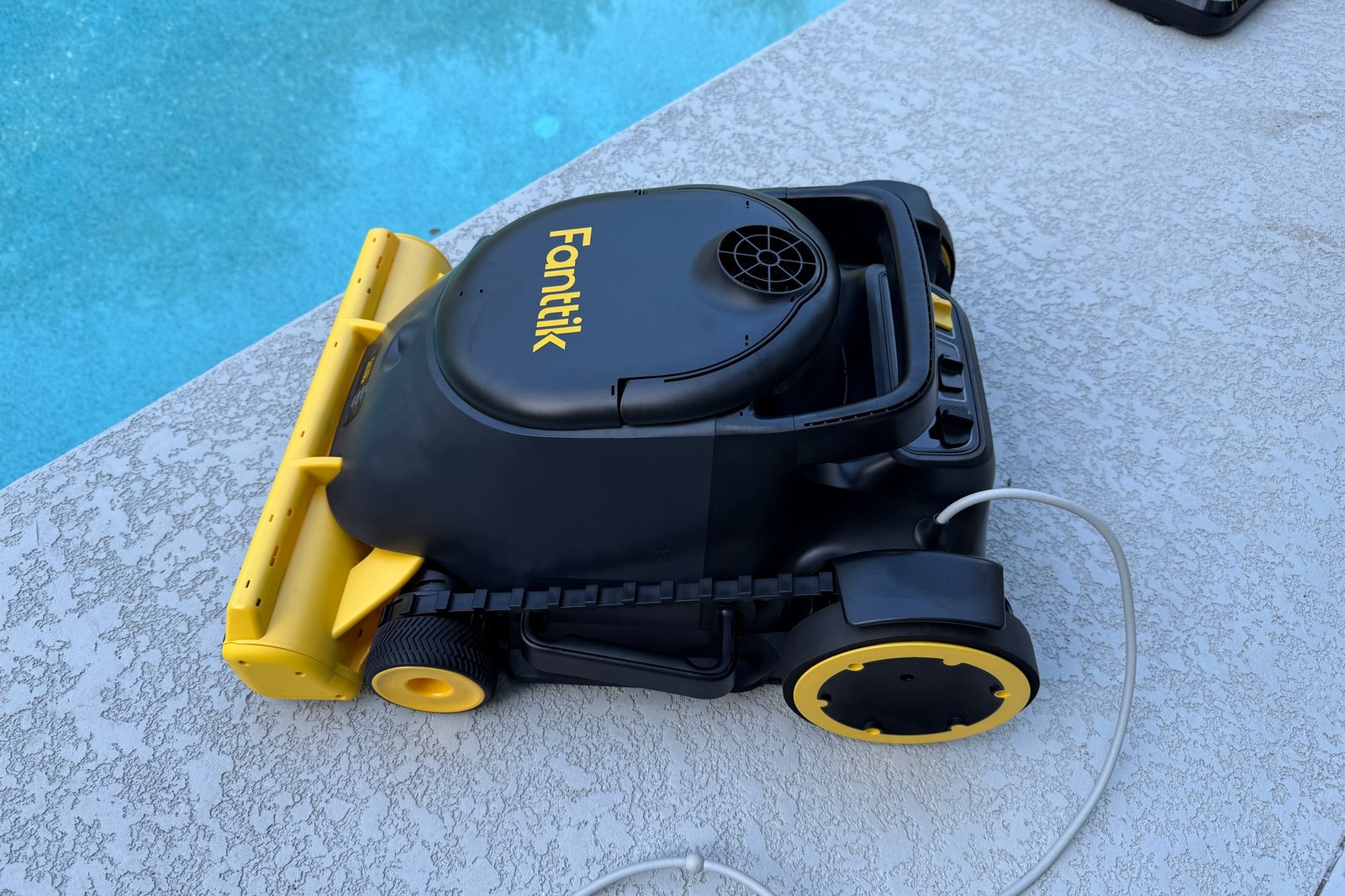
In my (new!) role as the editor of PCWorld’s growing home robotics category, I was only vaguely aware of robot pool cleaners. And when I did think about them, I assumed they shared many of the same limitations faced by robot vacuums.
But after reviewing our existing coverage and speaking with experts from Aiper, Mammotion, and WYBOTICS, those assumptions didn’t hold up. Robot pool cleaners are truly meant for a singular purpose. They’re supposed to keep an already healthy pool clean.
Here’s what most people (including me) got wrong.
Misconception: Robot pool cleaners can handle a swampy pool
Reality: They’re built for daily maintenance
Robot pool cleaners are great at regular upkeep. But if your pool has been sitting untouched for a while, that’s a different story.
If your pool looks like a bowl of chunky green soup (sorry for that awful visual), it’s going to need a lot more TLC than a robot pool cleaner is capable of giving.
Crystal Liu, brand manager at WYBOTICS, explained that if the pool has a massive algae bloom, the robot will struggle to “achieve a perfect result in a single cleaning cycle.” It’ll probably suck up some fallen leaves, but it won’t do diddly squat for the water quality. That needs chemical intervention.
First, you’ll need to kill the algae with chlorine shock–this should remove that greenish tint. Next, scrub the heck out of the walls and floor to break up the grime. Once you’ve done those things, you can plop the robot in the water.
That was the disconnect for me. I was thinking of these as recovery tools, when they’re really just maintenance tools. As Richard Wang, CEO of Aiper, told me, “Robotic cleaners are best used as part of a broader recovery process rather than a standalone solution” for heavily neglected pools.
That also matches what we’ve seen in testing at PCWorld. The Polaris Freedom Plus, our top pick in testing, is great at picking up everyday things like leaves, bugs, and dirt… but there’s no way it’s going to revive a severely neglected pool.
Here’s a good rule of thumb: If you can’t see the bottom of your pool, don’t drop the robot in there.
Misconception: The robots rely on the pool’s filtration system
Reality: They’re totally independent
I also assumed these cleaners tied into the pool’s pump and filtration system in some way. Fact is, most modern models don’t.
Christopher Null/Foundry
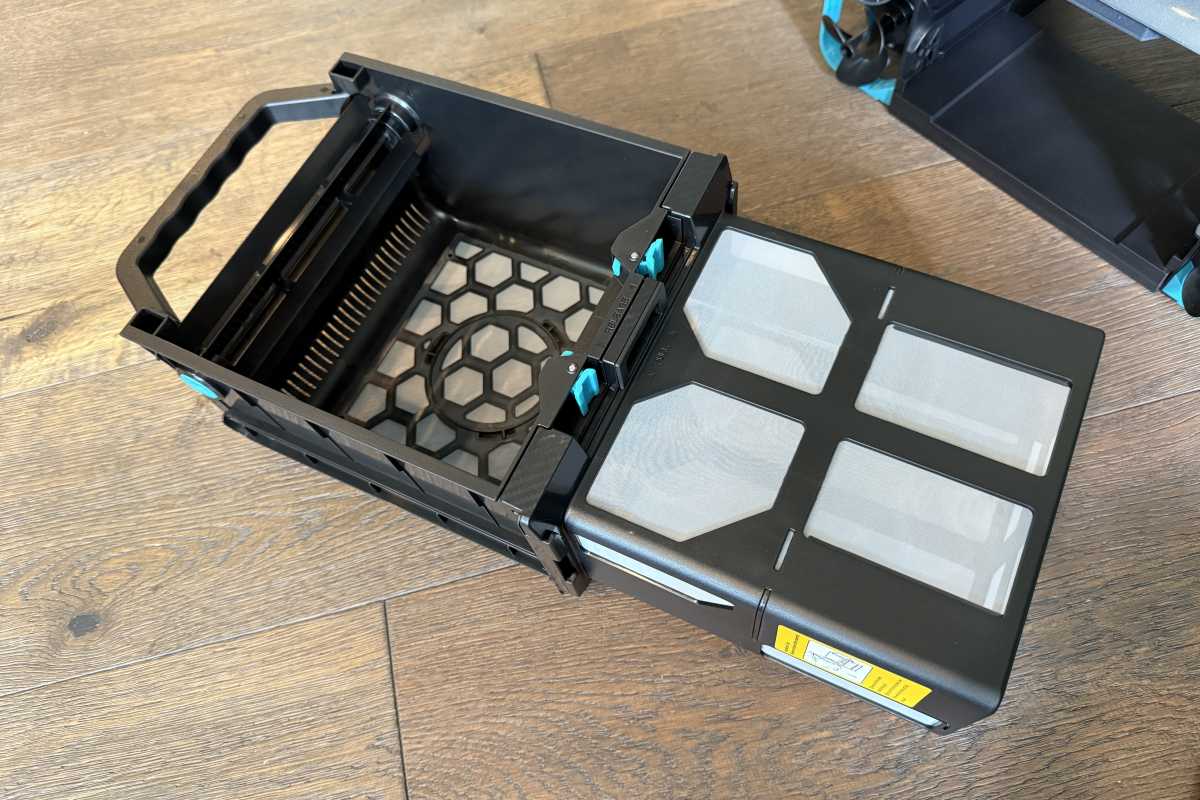
Robot pool cleaners are fully self-contained, and have their own motors, intake, and filters. All you have to do is drop yours in, let it do its thing, and then pull it out when it’s finished. You don’t have to hook it up to a skimmer and there’s no extra strain on your pump.
What they don’t do is replace your pool’s filtration system or chemical treatment. They only handle physical debris. This is a pretty common misunderstanding. As Wang puts it, robotic pool cleaners “are designed primarily for physical cleaning. Water chemistry management and filtration system upkeep still need to be handled through other equipment or routine maintenance.”
That said, there are smart water monitoring systems that use sensors to measure things like temperature and pH. Typically, these are small devices where the sensor sits in the pool while the hub sits outside. What they don’t do is add chemicals to your pool, so they’re more like diagnostic tools than anything. Sometimes folks pair robotic cleaners with monitoring systems, but these operate independently of each other.
Some of the newer robot designs try to solve the retrieval process, which can be a bit of a hassle. Most robot pool cleaners will only climb to the waterline and park near the surface. It’ll wait there until you reach it and take it out. This can be a hassle because they can weigh anywhere from 30 to 40 pounds when full of water. However, some high-end models (like the Mammotion Spino S1 Pro) have an external docking mechanism that lifts it out of the water.
Misconception: Pool cleaning robots must use a lot of energy
Reality: They’re surprisingly efficient
I assumed these would run for hours and hours. Maybe even overnight.
Not the case.
Most of them run for a couple of hours (generally less than three) per cycle and that’s it. They’re low-voltage, so the shorter runtime is kind of the whole point. They’re meant to clean efficiently, not just run endlessly. They also draw (roughly) about as much power as a vacuum.
In practice, that makes them more efficient than I expected, especially compared to systems that rely on your pool’s pump and filtration system (like a suction side cleaner, for example). You’re cleaning what needs to be cleaned without constantly circulating the entire pool.
Even models built for larger pools don’t just run indefinitely. The Fanttik Aero X runs longer than most (six hours!), which helps it cover more ground. That said, it’s still working within a set cycle. Our reviewer called it “a demon on wheels underwater,” which feels about right.
Misconception: You can run the pool robot occasionally
Reality: It depends on your pool’s environment
One thing I hadn’t really considered is how often you’re actually supposed to run a pool cleaning robot. Is it once weekly? Is it every other day?
Liu says it depends on how often the pool is used and how much debris it collects. Weather conditions play a role here, too. If your pool is surrounded by trees or exposed to wind, for example, it may need more frequent cleaning. Lightly used pools, on the other hand, may only need a few runs per week.
Gracy Bhardwaj, a representative at Mammotion, recommends “running a full cleaning cycle roughly every 3 days.”
Misconception: Wheels and treads are basically the same
Reality: Treads are better for climbing
Some robot cleaners stay on the floor of the pool. Others can climb walls. The better ones usually do both, but how they move matters more than I expected.
I assumed wheels versus treads was a minor detail. Well, it isn’t.
Christopher Null/Foundry
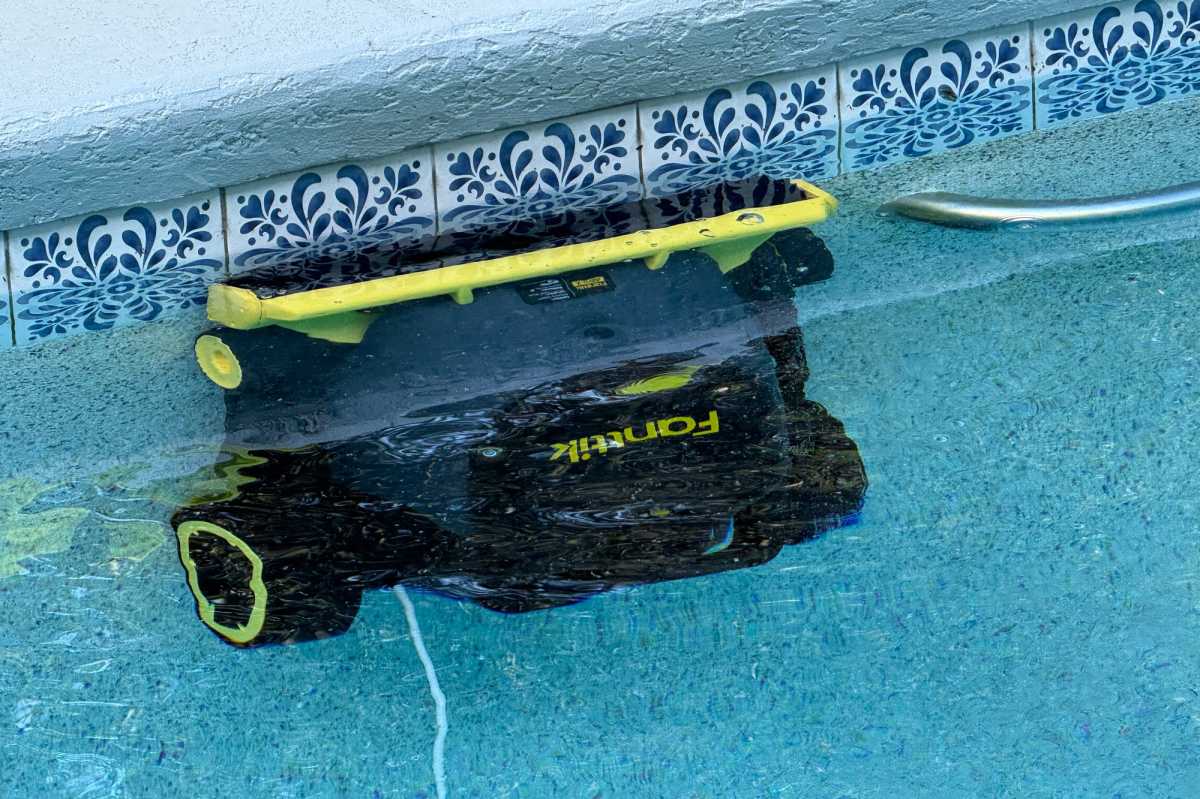
Treads have more contact with the surface, so they’ve got better grip. This is useful for climbing up vertical walls and cleaning the waterline. Wheels are more prone to slipping, which you may notice the first time a cleaner tries to climb and goes sliding back down.
If you care about wall cleaning, especially around the waterline area, that detail ends up being pretty important.
Misconception: Suction is all that matters
Reality: Brushes are just as important
Suction is the most obvious part. That’s the force that pulls debris in. It’s also the thing that I assumed was doing most of the work.
But that’s only part of the equation here. “A higher suction rating alone does not necessarily translate into better or more efficient cleaning,” Wang said.
The brushes are actually more important than most people think. They help scrub off the stuff that’s sticking to the walls and floor of your pool, and then the robot sucks it up. A robot with only suction will probably miss the spots that need a little more love.
On the flip side, strong brushing without good suction doesn’t help much either! You’ll loosen debris, but not fully remove it.
That balance shows up pretty clearly when you compare cheaper models to the more expensive ones. Better brush systems paired with stronger suction clean faster and generally leave less debris behind.
Misconception: A filter is just a filter
Reality: Filter quality makes a big difference
I hadn’t really thought about filters before this. A filter is a filter, right? It’s just the thing that catches debris inside the cleaner.
Not exactly.
Finer filters can catch smaller particles like dust and pollen, the kind of stuff you might not notice right away, but it impacts how clear the water looks. It’s the difference between “looks fine” and actually clear.
With better filtration, you probably don’t have to step in as often and clean things up yourself. You’re more likely to get consistent results after each run, too.
Final takeaways
Robot pool cleaners aren’t as limiting as I had initially thought. They can actually do some pretty cool things, but they’re not magic either.
They make a lot more sense once you understand what they’re actually built for, and that’s consistent, low-effort maintenance. It’s not going to save a badly neglected pool, but it will keep it consistently clean if you run it often.
This articles is written by : Fady Askharoun Samy Askharoun
All Rights Reserved to Amznusa www.amznusa.com
Why Amznusa?
AMZNUSA is a dynamic website that focuses on three primary categories: Technology, e-commerce and cryptocurrency news. It provides users with the latest updates and insights into online retail trends and the rapidly evolving world of digital currencies, helping visitors stay informed about both markets.
