
How times have changed. Intel today is a far cry from a decade ago, when it still dominated in desktop CPU performance. In recent years, we’ve witnessed back-to-back disappointments across Team Blue’s last few CPU generations. The sin of Arrow Lake, its last release? Minor performance gains that left enthusiasts indifferent—and gave AMD the opportunity to pummel Intel.
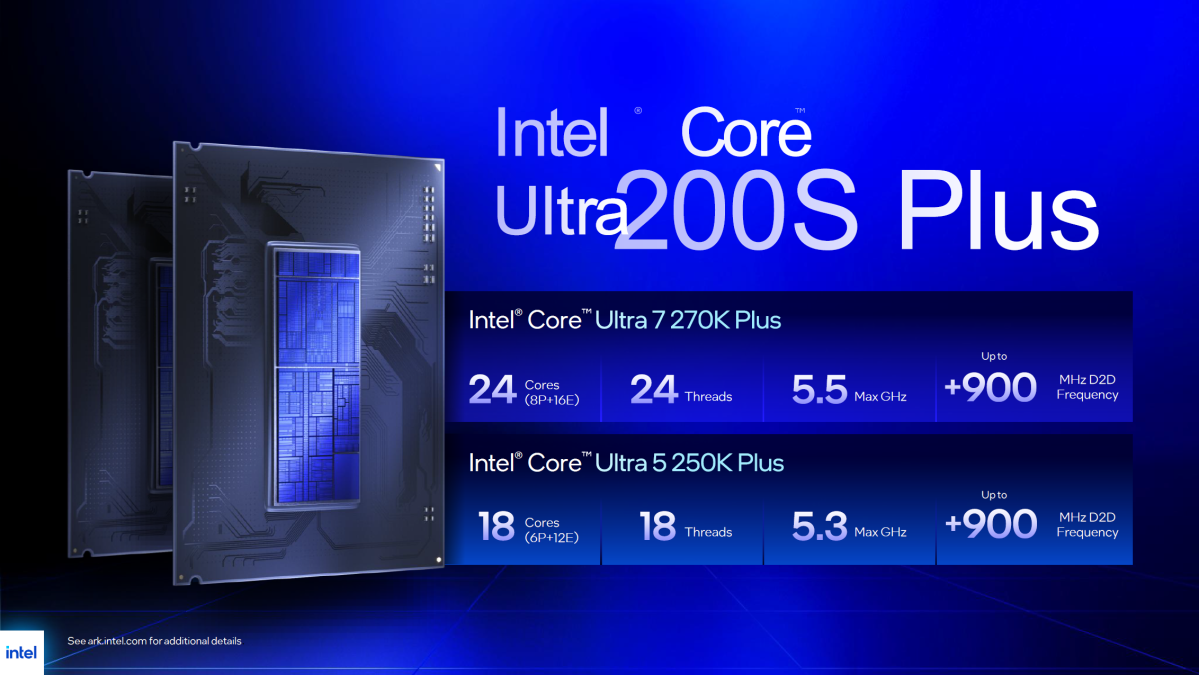
But this week sees the launch of Intel’s newest consumer desktop CPUs—Core Ultra 200S Plus, aka Arrow Lake Refresh processors. These chips add to the family, rather than succeed their 2024 siblings. And as it turns out, the top CPU among them offers good news during this bleak time for PC building. Let’s go over the top six things you should know about the Intel Core Ultra 7 270K.
Intel
Better performance than the Core Ultra 9 285
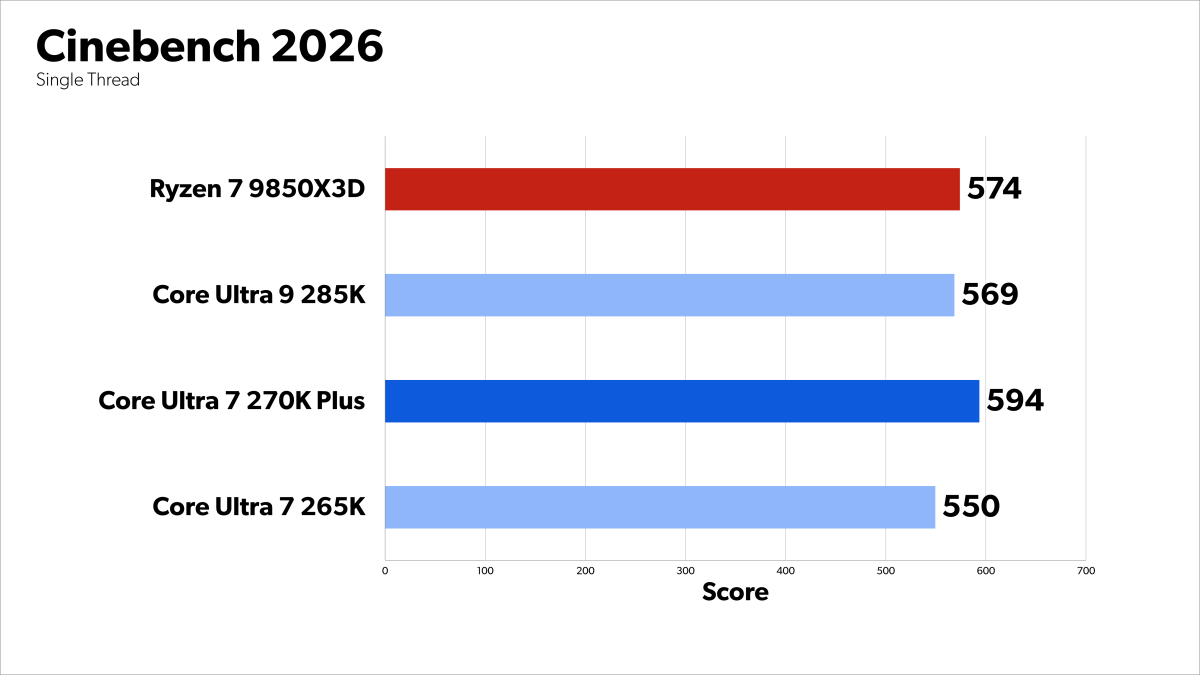
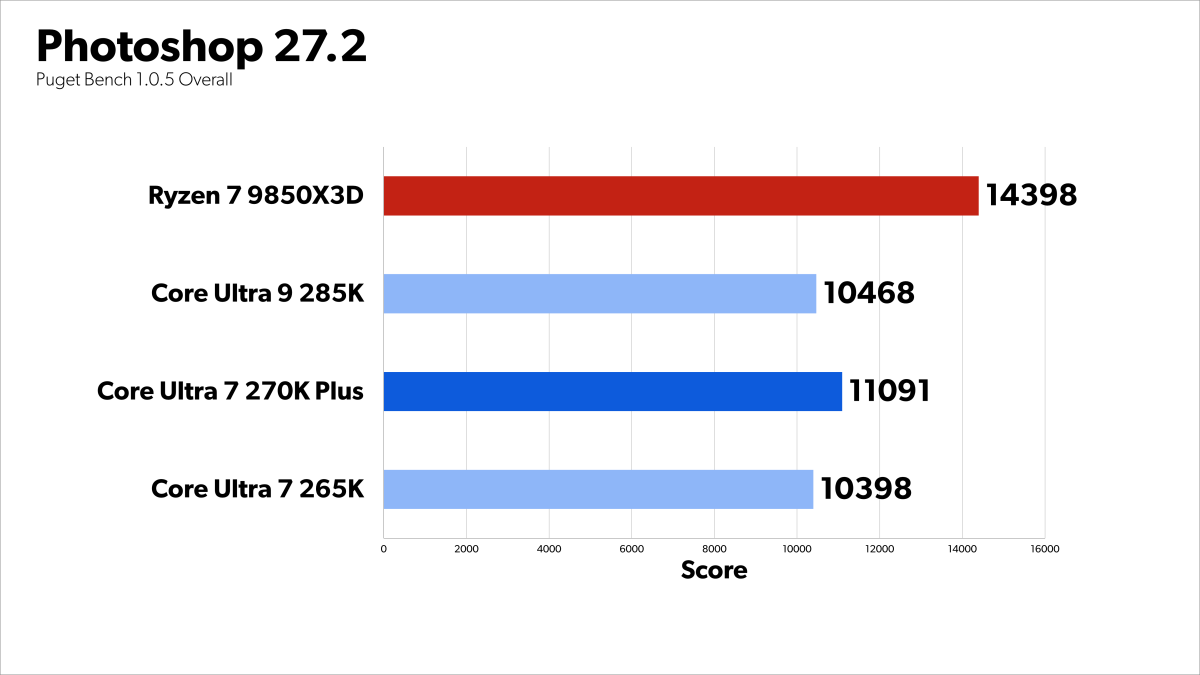
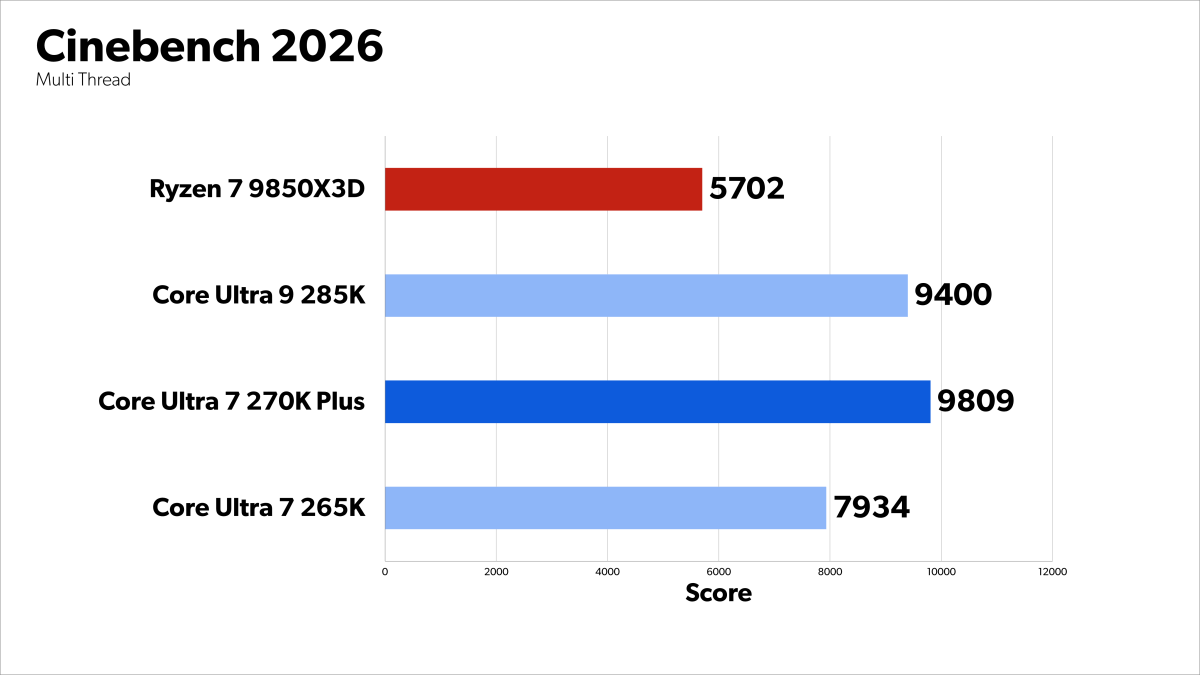
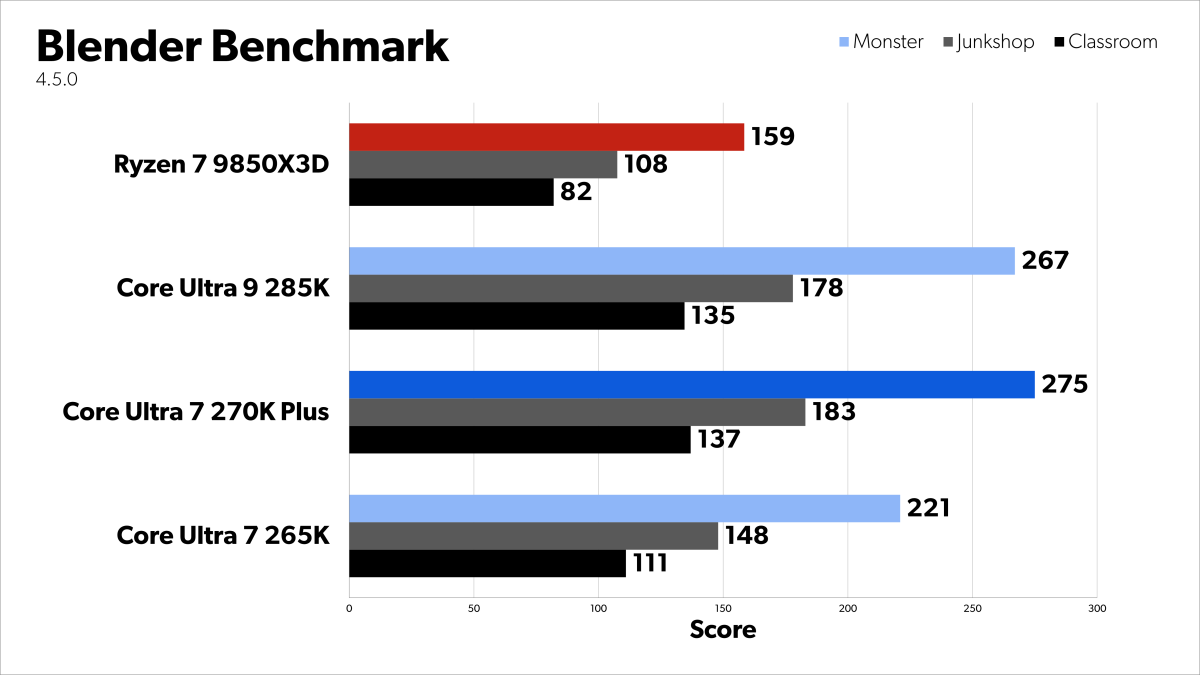
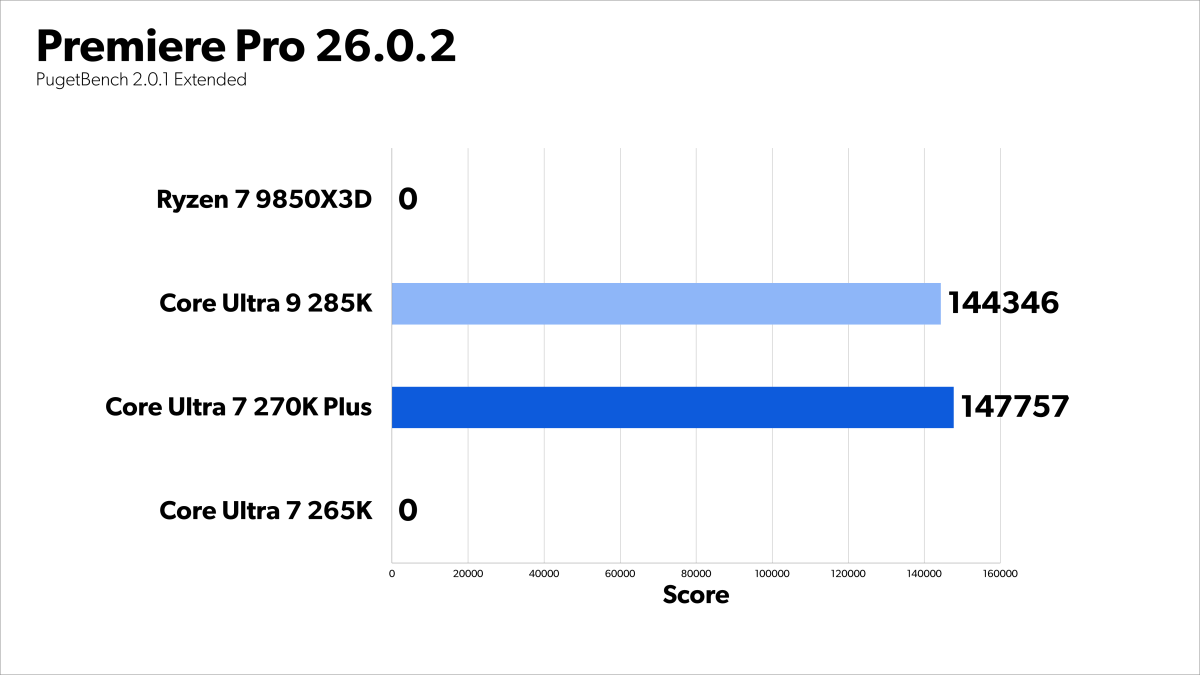
Bigger bar indicates better performance. Our Premiere Pro results reflect a 0 score for the 9850X3D and 265K Plus due to unexpected errors encountered during our limited time available for testing.
On paper, the 270K Plus is outranked by the 285K, thanks to its model number and lower maximum turbo speed, but this chip punches above such perceived weight. Across the content creation, gaming, and power consumption tests conducted by my colleague Adam Patrick Murray, we saw performance gains over the Core Ultra 9 285K of up to 12 percent.
In Cinebench 2026’s single-core benchmark, the 270K Plus offered a 4 percent uplift compared to the 285K. Similarly, in Photoshop 27.2, the boost was almost 6 percent. Meanwhile, for multicore tasks, we saw a performance increase ranging from about 1.5 to 3 percent in Blender to 4.35 percent in Cinebench 2026’s multicore test.
As for games, the 270K Plus churned out 6 percent more frames in F1 2024 and Cyberpunk 2077, and as much as 12 percent in Tom Clancy’s Rainbow Six Siege X. The 285K did manage to hold its own in 3DMark’s Time Spy Extreme, a synthetic DX12 gaming benchmark—there, Intel’s former top dog held steady with the 270K Plus.
Still trails in gaming against AMD’s X3D chips
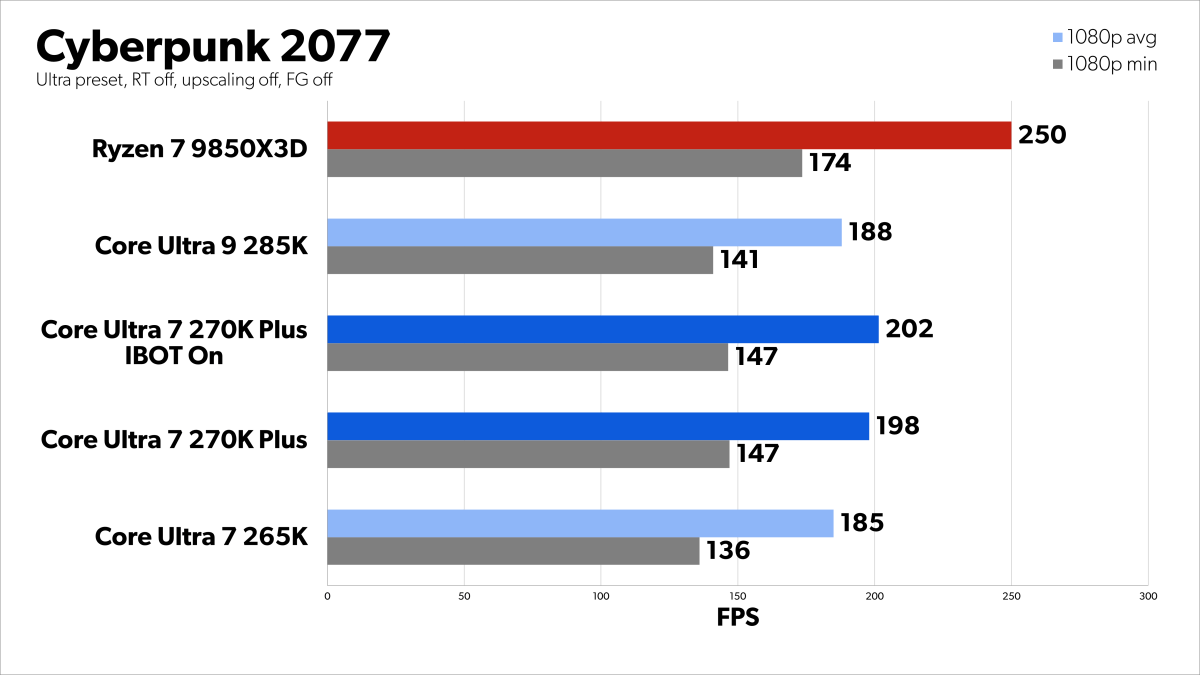
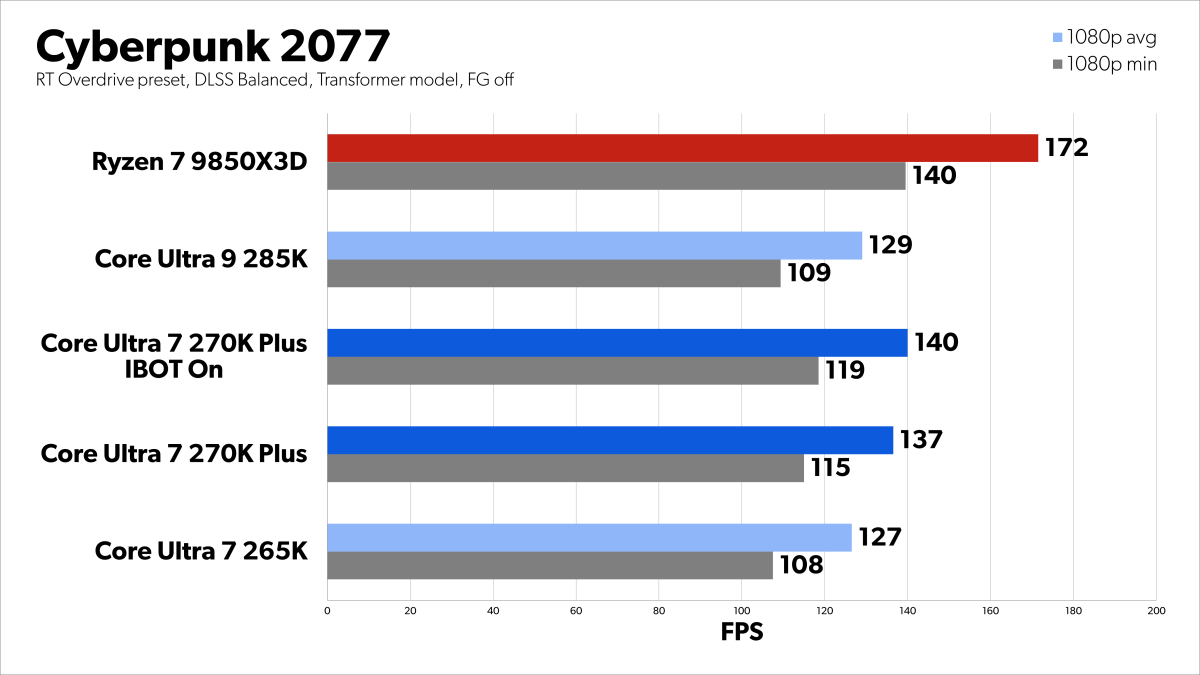
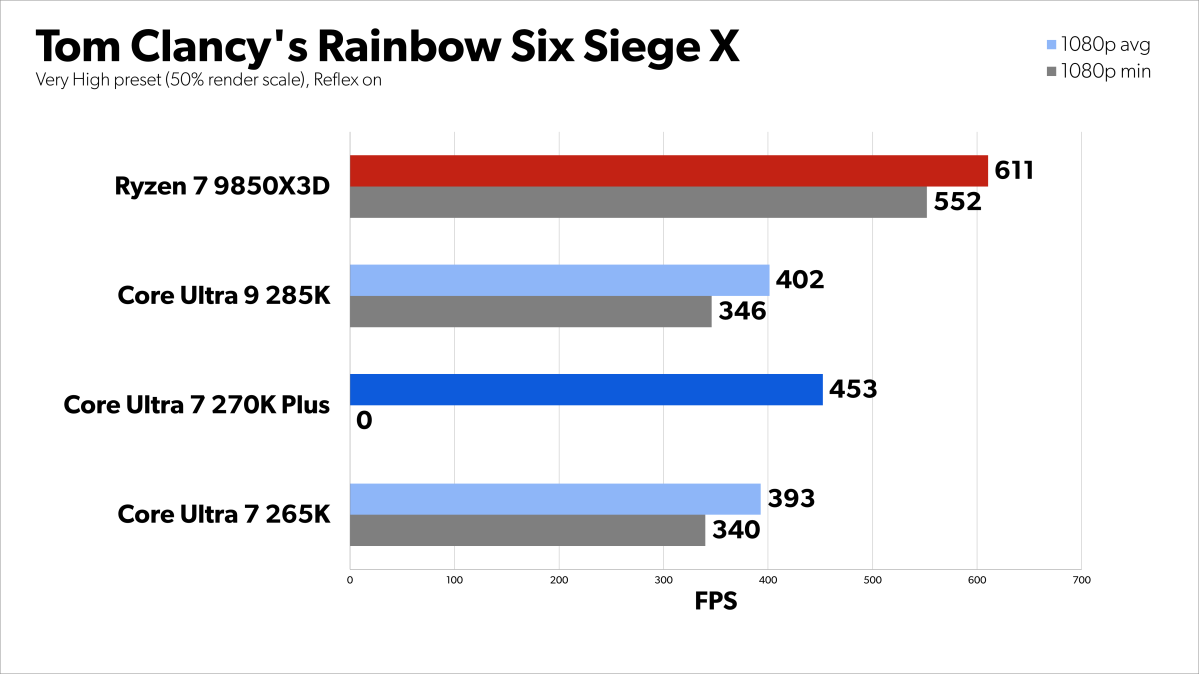
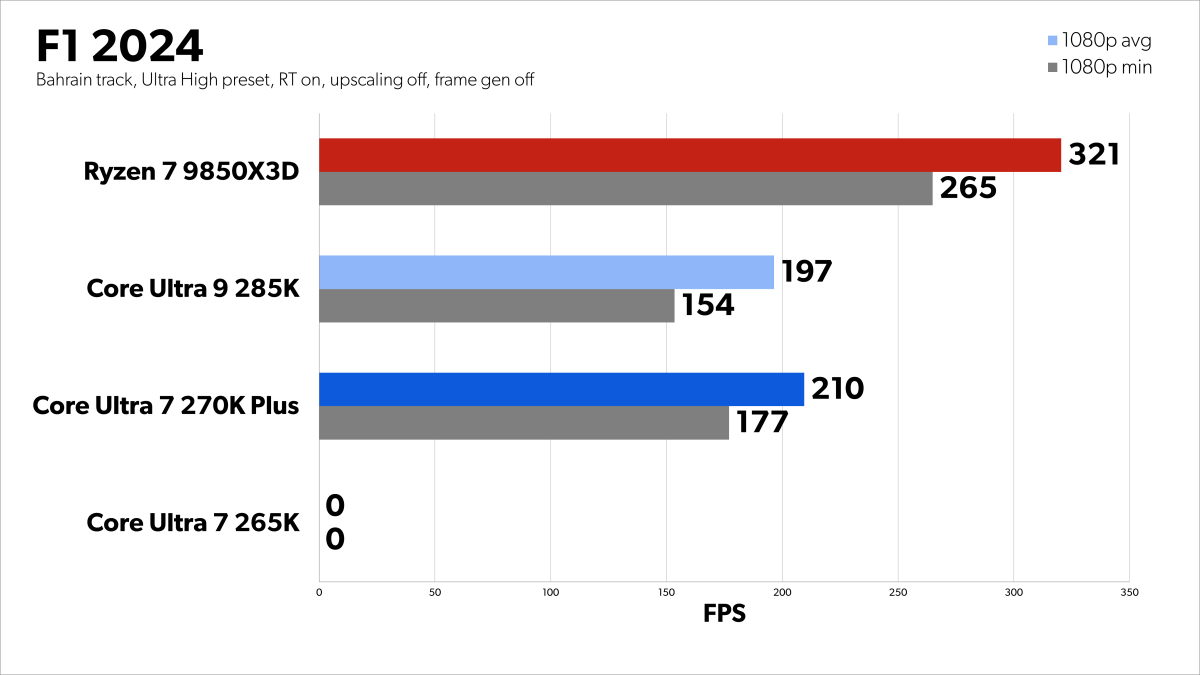
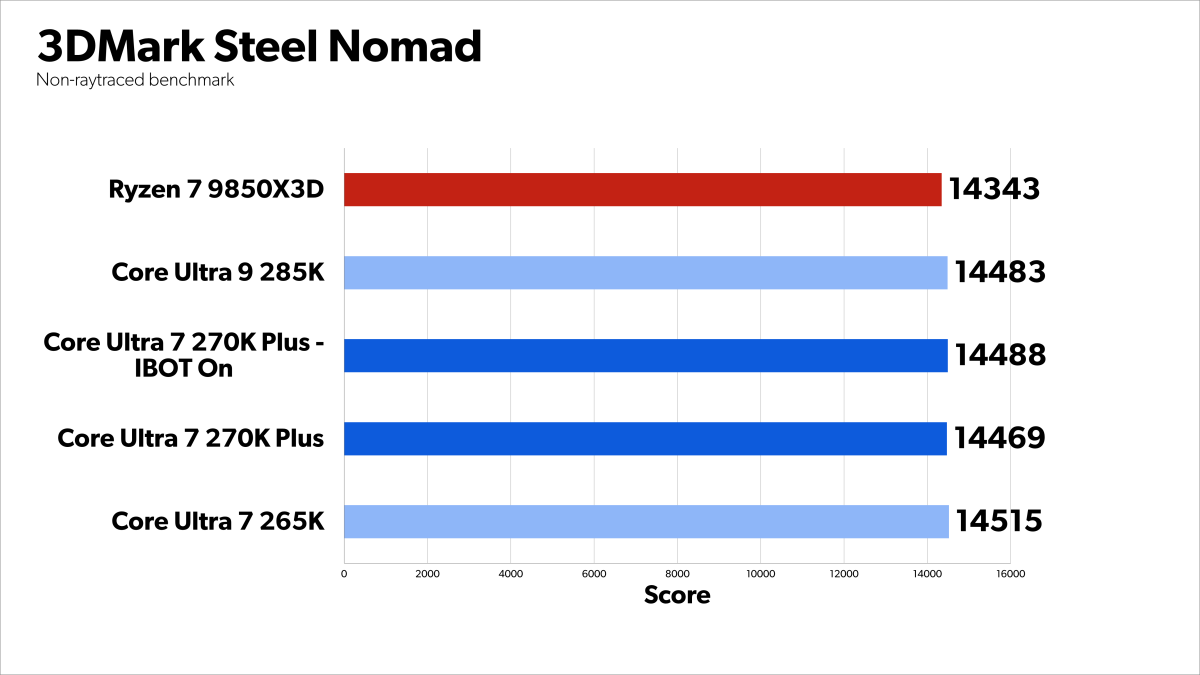
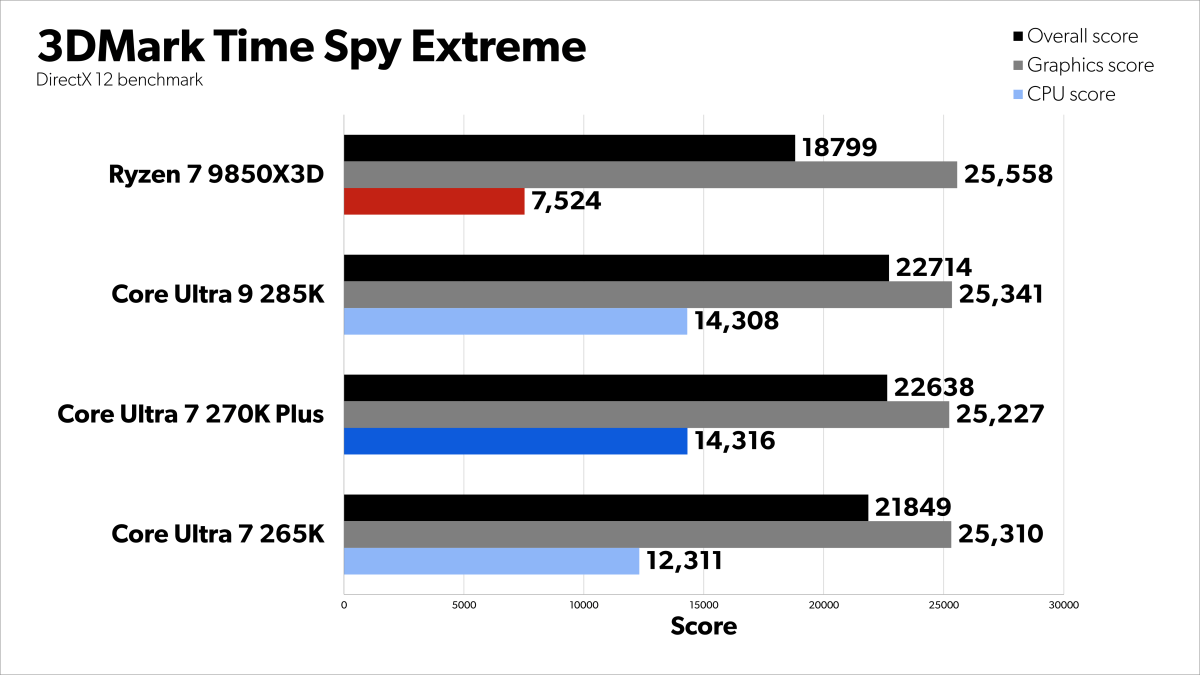
Bigger bars indicate better performance. Some game results reflect a 0 score due to unexpected errors during our limited time available for testing.
Even with Arrow Lake Refresh’s strides forward, Intel still can’t overtake AMD’s top-tier desktop CPUs. That’s good news if you already committed to Team Red, but less so if you were hoping for a closer fight.
When we pitted against each other, the 270K Plus continually trailed AMD’s Ryzen 9 9850X3D. In Cyberpunk 2077, you’ll lose 25.5 percent performance by switching from AMD’s flagship CPU to the 270K Plus—at least, at stock settings. The story’s similar for Tom Clancy’s Rainbow Six Siege X (25.8 percent decrease), and actually worse for F1 2024, where you’ll suffer a 34.5 percent drop.
The only good news? The gap may not be as big in titles that support the Intel Binary Optimization Tool (IBOT), performance-enhancing tech available to Arrow Lake Refresh CPUs. (More on this in just a bit.)
Stomps AMD’s 9850X3D in content creation
Bigger bars indicate better performance.
Better news: Arrow Lake Refresh still slaps (kind of literally) in heavily multithreaded work. Let loose against the 9850X3D, the 270K Plus shows a massive advantage for content creation.
This outcome isn’t too much of a surprise, as original Arrow Lake showed the same strength at launch. But have a look at the numbers: In Cinebench 2026’s multithreaded benchmark, you’ll gain a roughly 65 percent improvement in performance. It’s similar in Blender’s Monster, Junkshop, and Classroom tests, where we saw gains between 67 and 72 percent for the 270K Plus compared to the 9850X3D.
Short of it is, for tasks like rendering, the 270K Plus is the way to go. Even streamers who need a single PC to handle multiple things at once—simultaneous gaming, streaming, and recording—will likely better served by 270K Plus.
Dominant but power hungry
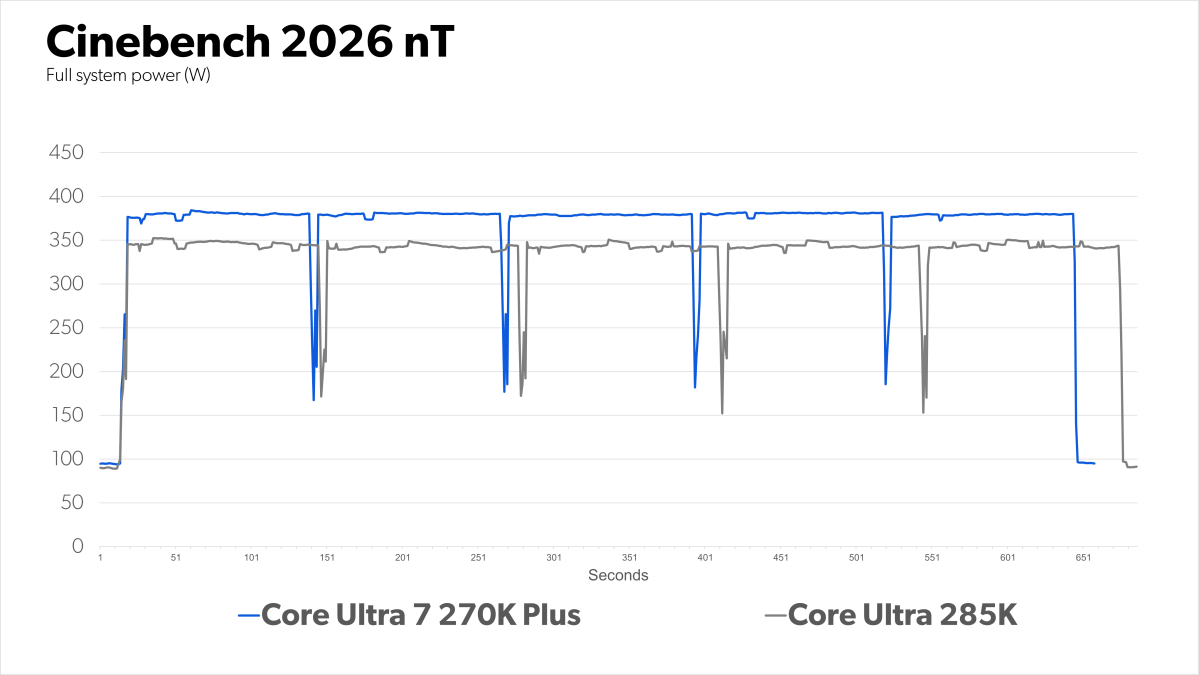
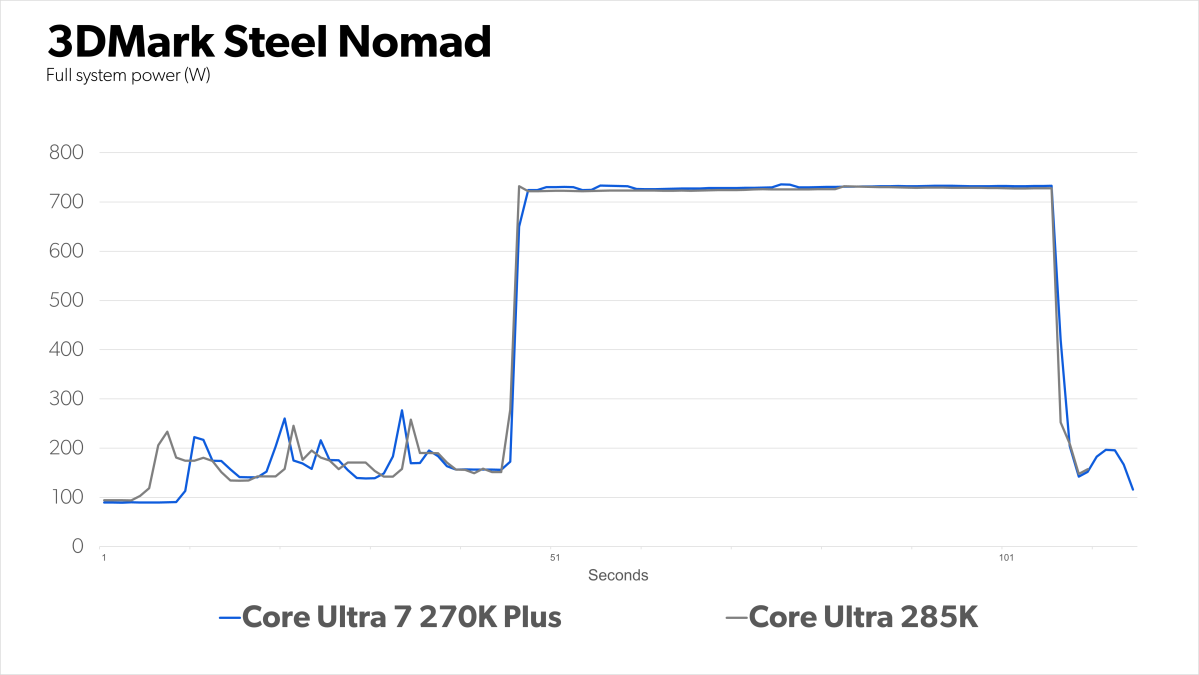
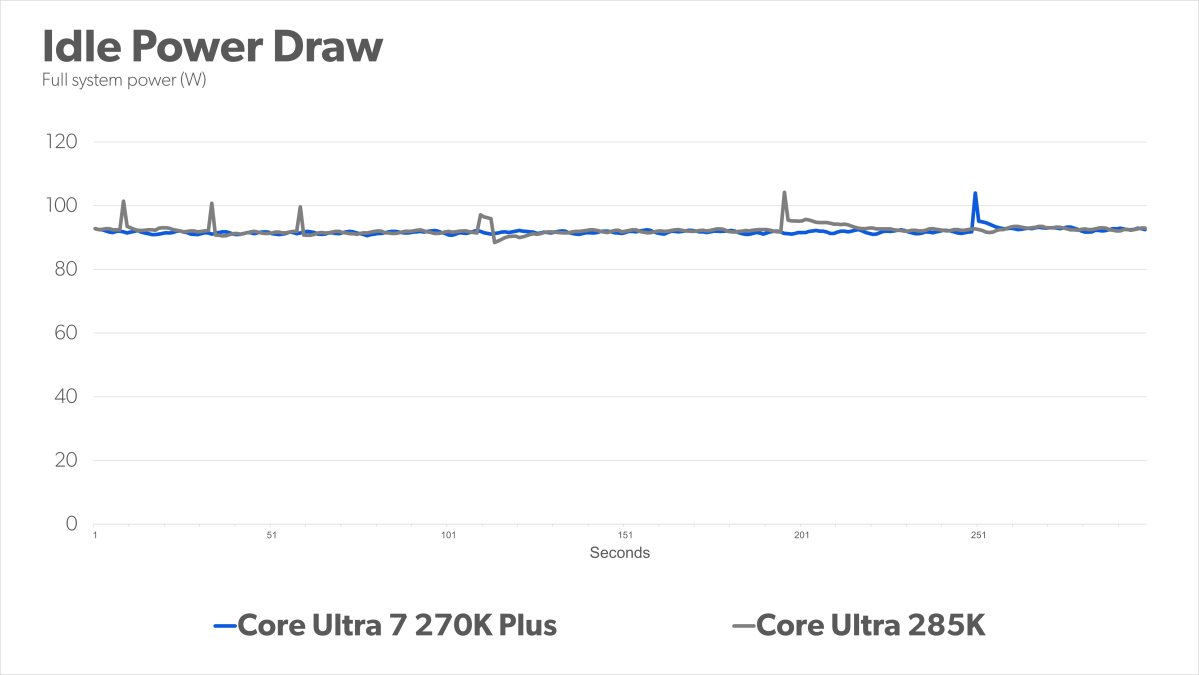
You may have wondered if the 270K Plus’s juiced-up performance also involves higher power use. The answer is yes—for heavier multithreaded tasks, at least.
Compared to the 285K, the 270K Plus isn’t as efficient, with about 40 watts more consumption during Cinebench 2026’s multithreaded benchmark. That’s about 11 percent more electricity pulled down in exchange for a performance gain of roughly 1.5 to 4 percent in multithreaded work (as mentioned above).
But during less punishing loads, like 3DMark’s Steel Nomad gaming benchmark (a non-raytracing test that simulates punishing DX12 titles), the power draw for the 270K Plus and 285K was virtually identical. It’s the same during idle as well. So while the 270K Plus is a chip best meant for heavier workloads, you’ll at least won’t get hit harder during gaming, web browsing, and the like.
A heck of a lot cheaper than everything else
Adam Patrick Murray / Foundry
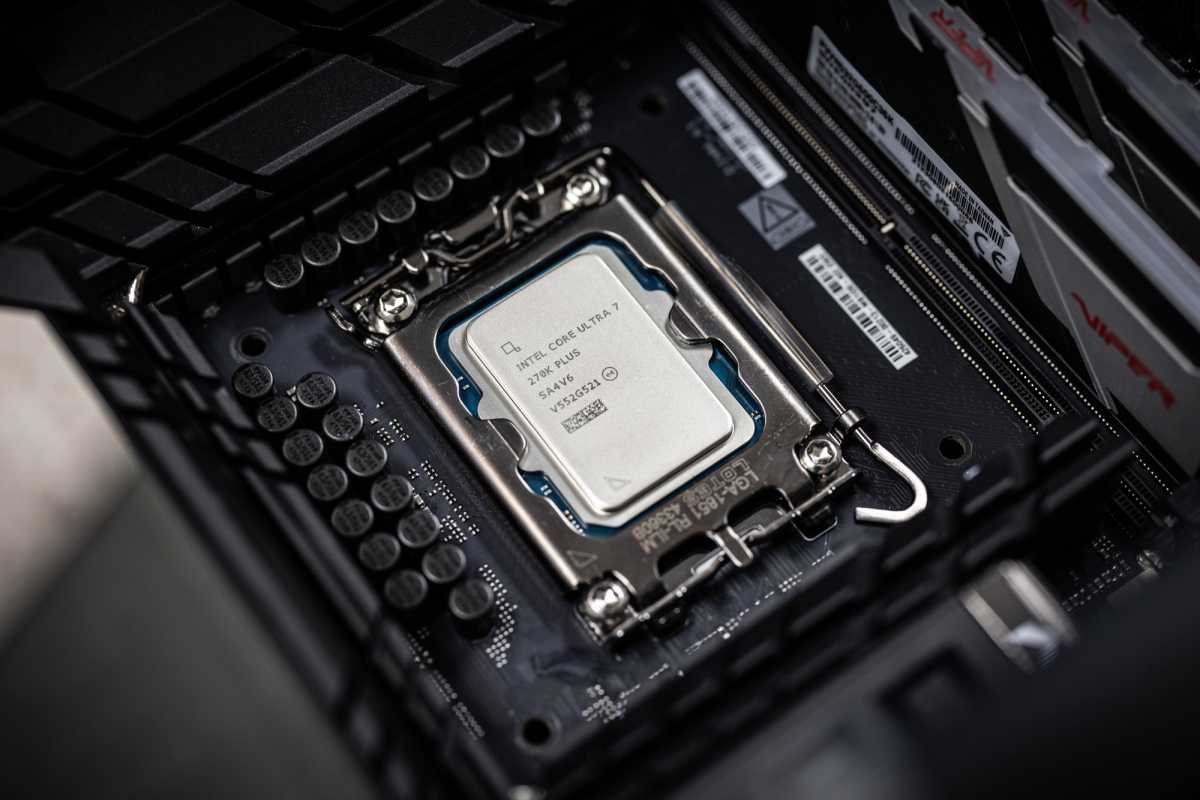
If you only look at performance numbers, the 270K Plus might sound only mildly interesting. But factor in its price—just $299—and suddenly, it becomes pretty exciting.
The 285K’s list price? $589, with a current street price around $560. The 270K Plus outdoes its older, higher-positioned sibling in performance with savings of $260. (That’s a 46 percent discount, essentially.) Meanwhile, the 270K Plus cost about 39 percent less ($199 in savings).
In fairness to AMD, you could argue that the 9800X3D (which comes very close to the 9850X3D in performance) is the better comparison for value. Even then, with a current street price of $420 for the 9800X3D, the 270K Plus costs about 28 percent less ($120 in savings).
And here’s the thing: All those saved dollars can equal a real nice motherboard at minimum. Depending on which CPU you would have gotten otherwise, the 270K Plus could also offset the eyewatering expense of the DDR5 RAM you’ll need for your PC build.
IBOT: Bonus performance
Sharp-eyed readers will notice that on one of our charts, the performance for the 270K Plus was listed twice. Once with stock settings, and another with IBOT on. What’s IBOT? As noted above, it stands for Intel Binary Optimization Tool, which applies optimizations to supported games.
This particular tool isn’t the only one in Intel’s stable—IBOT is part of a happy family of performance-boosting acronyms, like APO and IPPP. But this one is forward-facing, available on just Arrow Lake Refresh, Panther Lake, and future Intel CPUs.
For a deeper dive on IBOT, be sure to check out our video interview with Intel that explains the technology in more detail—like how it differs from APO. But you can think of IBOT as a matchmaker, of sorts. It takes a game’s code and then pairs it with a specific set of optimizations, based on your particular PC’s hardware.
What buyers of Arrow Lake Refresh should know is that IBOT is not on by default, so if you want this performance boost, you must use Intel’s software to activate the feature. It also is only in 12 games as a start, with no concrete timeline for additional title support.
And yes, for those who’ve abandoned Windows: IBOT will eventually come to Linux. But Intel won’t say when—not just yet.
This articles is written by : Fady Askharoun Samy Askharoun
All Rights Reserved to Amznusa www.amznusa.com
Why Amznusa?
AMZNUSA is a dynamic website that focuses on three primary categories: Technology, e-commerce and cryptocurrency news. It provides users with the latest updates and insights into online retail trends and the rapidly evolving world of digital currencies, helping visitors stay informed about both markets.
