TL;DR
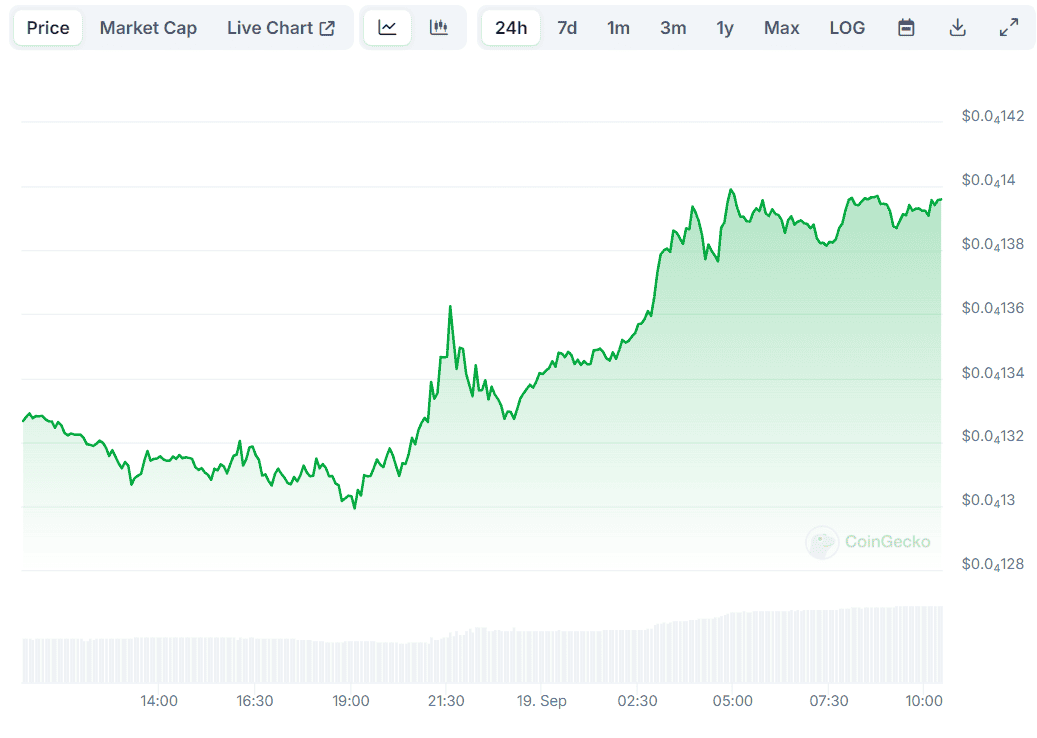
SHIB saw a 5% daily rise, with speculation of a 10,000% rally, though it’s highly unlikely.
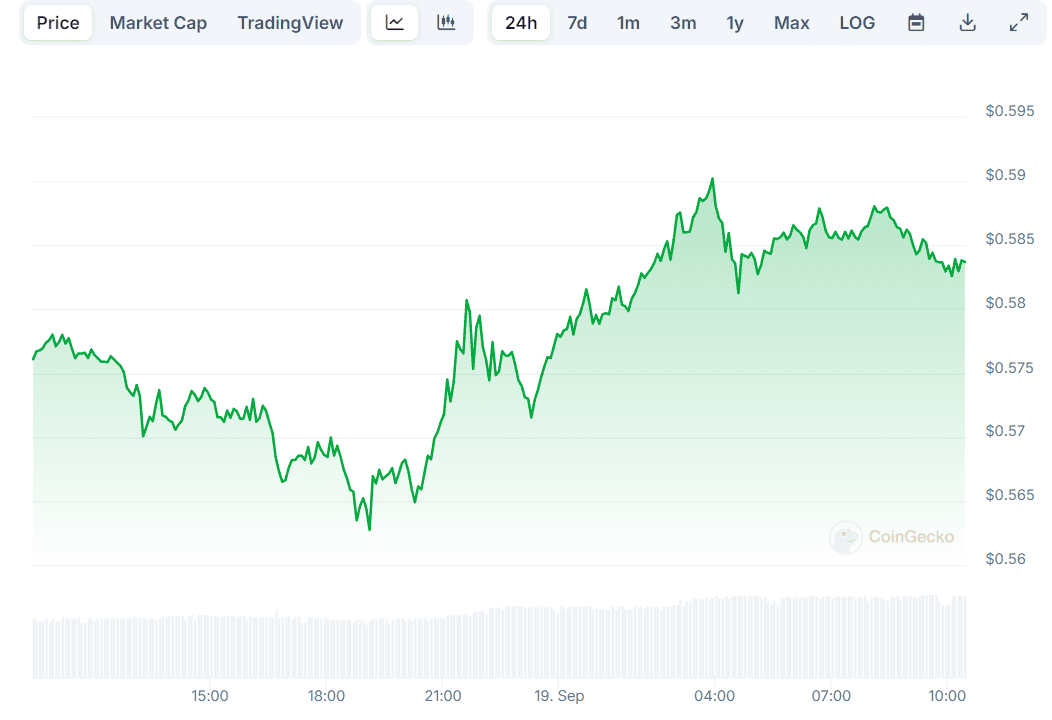
XRP gained 1% in the past 24 hours, with predictions of a potential surge to $5 or even $27.
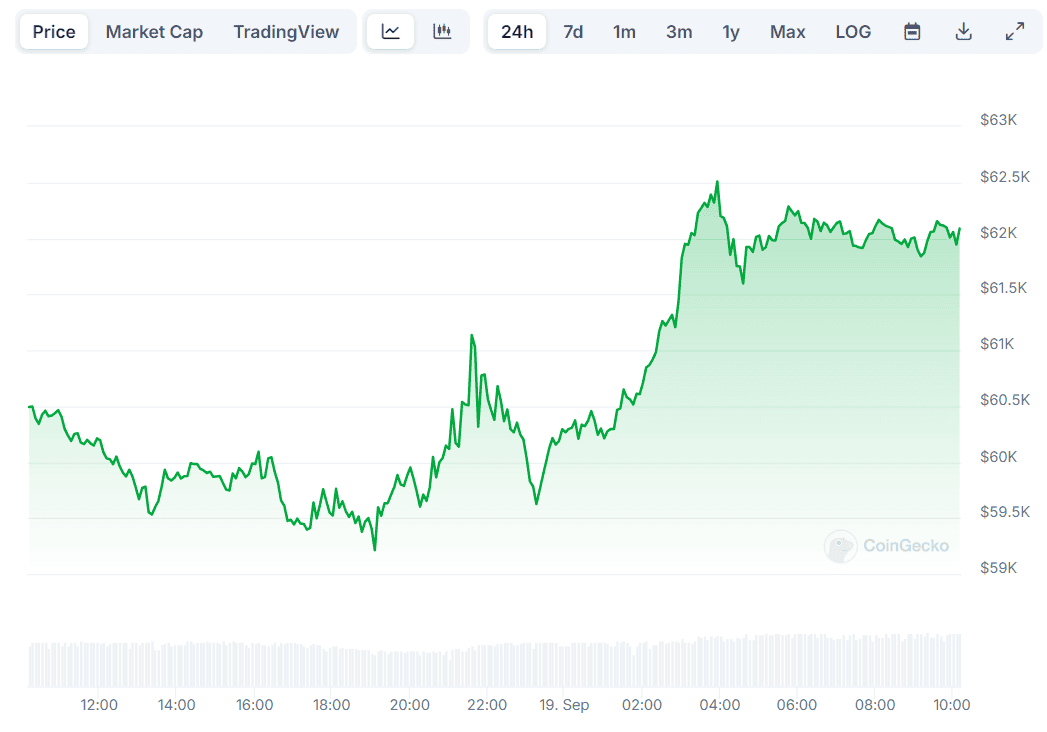
BTC hit $62,000 after the Fed’s rate cut and some believe this could be the starting point of a new all-time high.
BTC’s Resurgence
Last but not least, we will touch upon the primary cryptocurrency, which has also been at the forefront of gains over the past 24 hours. BTC reclaimed $62,000 hours after the Fed lowered the benchmark, while bullish analysts expect a further jump in the following months.
The X user Bluntz advised investors to stay in the ecosystem, claiming this will be the next “BTC ATH rip.”
“This will be the last macro leg higher, you got about 3-4 more months to make as much money as possible,” the trader envisioned.
Captain Faibik was optimistic, too, expecting bulls to test the $68,000 level “in the coming days.”
The Odds of an Epic SHIB Bull Run
The second-largest meme coin experienced an uptrend lately, with its price rising by 5% in the past 24 hours and currently trading at around $0.00001392. This comes at a time when the entire cryptocurrency market headed north following the US Fed’s decision to lower interest rates by 0.5%.
Earlier this week, one popular analyst speculated that Shiba Inu (SHIB) may be poised for an outrageous price explosion. The X user, who has almost 150,000 followers, claimed the token could erase two zeroes from its valuation in the future.
The projected rally would put SHIB’s price at $0.001392, representing a nearly 10,000% increase. It is worth noting that the meme coin’s market capitalization must reach approximately $800 billion for this forecast to happen.
Currently, Bitcoin (BTC) is the only cryptocurrency whose market cap exceeds that mark, making the prediction highly unlikely (to say the least).
How’s XRP Doing?
Ripple’s XRP is also in the green, albeit registering less substantial gains than the rest of the leading cryptocurrencies. It keeps trading at around $0.58, or a 1% rise compared to the figure observed on September 18.
Despite moving somewhat sideways, some enthusiasts believe the token could be on the verge of an exponential pump. The X user Max (CEO and founder of the crypto analysis platform BecauseBitcoin) is among the examples, revealing that he recently entered the ecosystem as an investor. The BTC bull purchased “a lot of” XRP, predicting its price to skyrocket to $5 sometime next year.
EGRAG CRYPTO was even more bullish, outlining five different scenarios for the future. The most optimistic depicts XRP trading at the ridiculous $27.
The post Bitcoin’s Rally, Ripple (XRP) Price Outlook, and a Very Interesting Shiba Inu (SHIB) Prediction: Bits Recap Sep 19 appeared first on CryptoPotato.
SHIB was forecasted to explode by the ridiculous 10,000%, whereas XRP trails behind the leading cryptocurrencies in terms of daily gains.
Amazon’s journey from a modest online bookstore to the world’s largest online retailer is a narrative of innovation, disruption, and relentless ambition. Today, Amazon dominates the e-commerce landscape, setting the standard for online shopping with its vast product selection, lightning-fast delivery, and customer-centric approach. This article explores the evolution of Amazon’s leadership in online shopping, examining the key strategies, innovations, and challenges that have shaped its rise to the top.
The Early Days: From Bookstore to Everything Store
Amazon was founded by Jeff Bezos in 1994 as an online bookstore, capitalizing on the internet’s potential to reach a global audience. The decision to start with books was strategic; books were easy to ship, did not require much storage space, and had a universal appeal. From the beginning, Bezos envisioned Amazon as more than just a bookstore. His long-term goal was to create the “everything store,” a one-stop-shop where customers could find and purchase anything they needed online.
The initial success of Amazon was driven by its innovative approach to e-commerce. While traditional bookstores were limited by physical space, Amazon offered an extensive catalog of books that was virtually limitless. The company’s early focus on customer satisfaction, with features like customer reviews, personalized recommendations, and a user-friendly interface, set it apart from competitors.
By 1997, Amazon had gone public, and its rapid growth continued. The company began to expand its product offerings beyond books, gradually adding categories like music, electronics, and toys. This diversification was essential to Amazon’s strategy of becoming the go-to online retailer for all consumer needs. The company’s ability to offer a wide range of products, combined with its commitment to customer service, established it as a leader in online shopping.
Innovation and Expansion: The Prime Revolution
One of the most significant milestones in Amazon’s evolution was the launch of Amazon Prime in 2005. For an annual fee, Prime members received free two-day shipping on eligible purchases, a proposition that was revolutionary at the time. The introduction of Prime was a game-changer, transforming customer expectations and further solidifying Amazon’s leadership in online shopping.
Prime was more than just a shipping service; it was a strategic move to create customer loyalty. The subscription model incentivized customers to make Amazon their default shopping destination, as the more they used Prime, the more value they received. Over time, Amazon expanded the benefits of Prime to include streaming video and music, exclusive deals, and other perks, making it an indispensable service for millions of customers.
The success of Prime can be measured by its membership numbers, which have grown exponentially over the years. As of 2024, Amazon Prime has over 200 million members worldwide, a testament to the value it offers. The Prime membership model has been so successful that it has influenced the broader retail industry, with many competitors launching their own subscription services in response.
The Technology Edge: Fulfillment and Logistics
Amazon’s dominance in online shopping is not just a result of its vast product selection and customer-centric approach; it is also rooted in its technological prowess. The company has invested heavily in building a state-of-the-art fulfillment and logistics network, which has been a critical factor in its ability to offer fast, reliable delivery to customers.
Amazon’s fulfillment centers, which are strategically located around the world, are marvels of automation and efficiency. These facilities use advanced robotics, artificial intelligence, and data analytics to manage inventory, process orders, and ship products with unparalleled speed. The company’s ability to deliver products quickly and accurately is a key reason why customers choose Amazon over other online retailers.
In addition to its fulfillment centers, Amazon has developed a vast logistics network that includes its own fleet of planes, trucks, and delivery vehicles. The company’s investment in logistics has allowed it to reduce its reliance on third-party carriers like UPS and FedEx, giving it greater control over the delivery process. This vertical integration has enabled Amazon to offer services like same-day and next-day delivery, further enhancing its competitive advantage.
Moreover, Amazon’s logistics innovations extend beyond its own operations. The company’s delivery service partner (DSP) program has created opportunities for small businesses to operate delivery routes for Amazon, while its crowd-sourced delivery platform, Amazon Flex, allows individuals to deliver packages using their own vehicles. These initiatives have expanded Amazon’s delivery capacity and ensured that it can meet the growing demand for fast shipping.
Expanding the Ecosystem: Marketplace and AWS
Another key component of Amazon’s success in online shopping is its ability to create a comprehensive ecosystem that extends beyond retail. The Amazon Marketplace, launched in 2000, has been instrumental in expanding the company’s product selection and driving revenue growth. The Marketplace allows third-party sellers to list their products on Amazon’s platform, giving customers access to a wider range of goods and enabling Amazon to earn a commission on each sale.
The success of the Marketplace has been staggering. Today, over half of the products sold on Amazon are from third-party sellers, many of whom are small and medium-sized businesses. The Marketplace has also been a critical factor in Amazon’s global expansion, as it allows sellers from around the world to reach customers in different markets without the need for a physical presence.
In addition to the Marketplace, Amazon Web Services (AWS) has played a crucial role in the company’s growth and profitability. Launched in 2006, AWS offers cloud computing services to businesses, allowing them to store data, run applications, and scale their operations with ease. AWS has become the backbone of the internet, powering everything from startups to large enterprises. The revenue generated by AWS has given Amazon the financial flexibility to invest heavily in its retail operations, including its logistics network, Prime, and original content for Prime Video.
Challenges and Criticisms
While Amazon’s leadership in online shopping is undeniable, it has not been without challenges and criticisms. The company’s dominance has raised concerns about its impact on competition, with critics arguing that Amazon’s scale and market power give it an unfair advantage over smaller retailers. There have also been concerns about the treatment of workers in Amazon’s fulfillment centers, with reports of grueling conditions and low wages sparking public outcry and calls for better labor practices.
Amazon has also faced scrutiny over its impact on the environment. The company’s rapid delivery services, which require a vast logistics network, contribute to carbon emissions and environmental degradation. In response, Amazon has pledged to achieve net-zero carbon emissions by 2040 and has invested in renewable energy and electric vehicles to reduce its environmental footprint.
Despite these challenges, Amazon continues to grow and innovate, constantly pushing the boundaries of what is possible in online shopping. The company’s ability to adapt to changing consumer preferences, invest in technology, and create a seamless shopping experience has ensured its position as the leader in e-commerce.
The Future of Amazon in Online Shopping
As Amazon looks to the future, it faces both opportunities and challenges. The rise of new technologies like artificial intelligence, machine learning, and automation will continue to shape the e-commerce landscape, and Amazon is well-positioned to leverage these innovations to enhance its operations and customer experience.
The company is also likely to continue expanding its ecosystem, integrating its retail operations with other services like AWS, Prime Video, and Alexa. This integration will further entrench Amazon in the daily lives of consumers, making it even more difficult for competitors to challenge its dominance.
In conclusion, Amazon’s leadership in online shopping is the result of a relentless focus on customer satisfaction, innovation, and scale. From its early days as an online bookstore to its current status as a global e-commerce giant, Amazon has consistently pushed the boundaries of what is possible in retail. As the company continues to evolve, it will undoubtedly remain a dominant force in the world of online shopping, shaping the future of commerce for years to come.