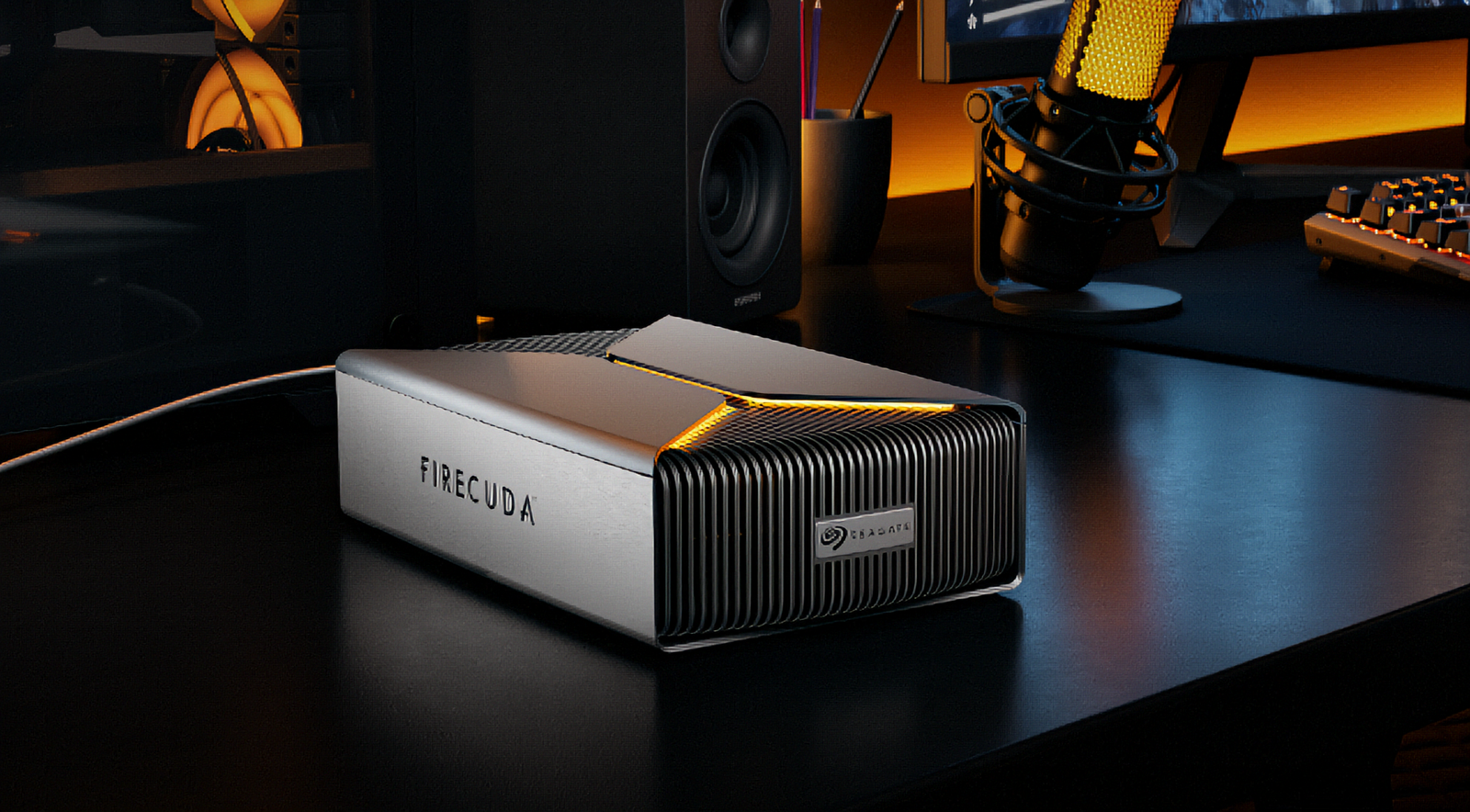
An enormous hard drive. A speedy cache. Storage makers have tried to deliver the best of both worlds to content creators for years now, and Seagate’s Alkemi platform is the latest attempt to provide creators what they’ve been asking for. But there’s a catch.
Seagate’s 8TB and 20TB FireCuda Forge external drives are the first to use the Alkemi platform, which combines a traditional “cold” storage drive with a “hot” SSD. But Seagate isn’t supplying the SSD. You are.
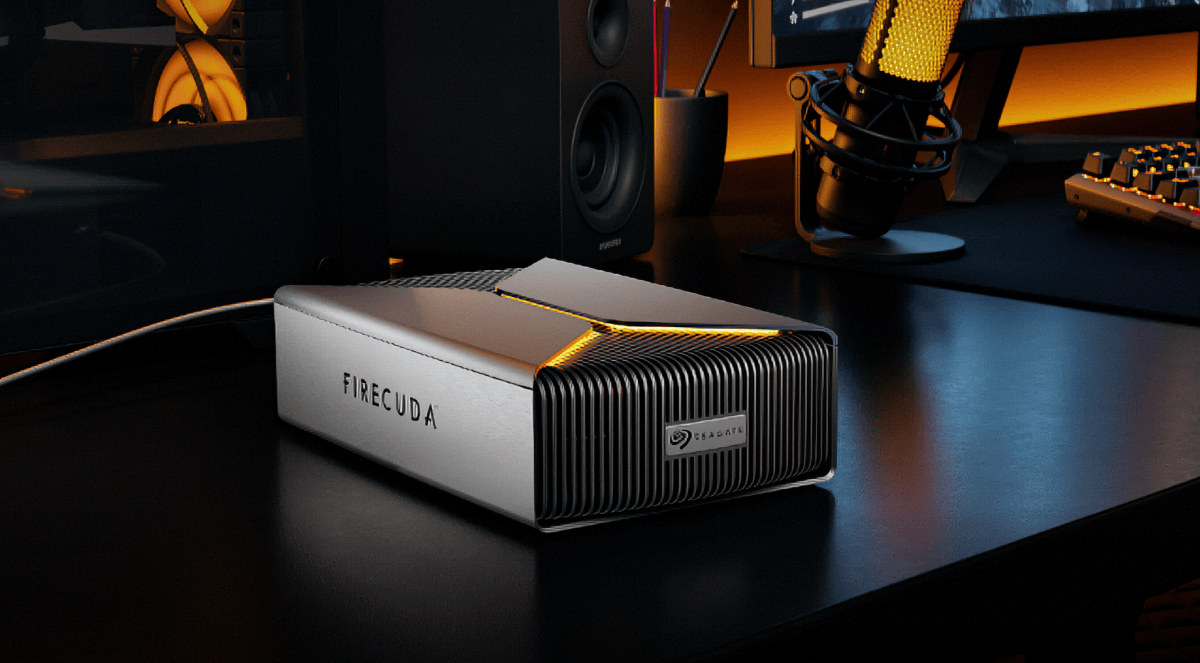
Interestingly, the FireCuda Forge drives are external, sitting on your desk. (They measure 9.5 x 5.8 x 2.6 inches and weigh over 4 pounds.) It connects via a USB4 (Thunderbolt) cable to your PC. The SSD lives inside the FireCuda Forge, mounted inside an M.2 slot.
Everyone knows that storage prices have shot up over the last year and a half, and the FireCuda Forge adds a new wrinkle.
Seagate is charging $699 for the 8TB drive and $899 for the 20TB model, and requires that you supply a PCIe Gen 3 M.2 internal SSD that’s (fortunately) less than 1TB. The SSD itself needs to deliver 2,400/2,000MB/s read/write speeds, and Seagate recommends that it include some sort of a RAM cache itself. Those are modest requirements as SSDs go; a Samsung 970 Evo Plus, for example, delivers 3,500/3,300MB/s speeds.
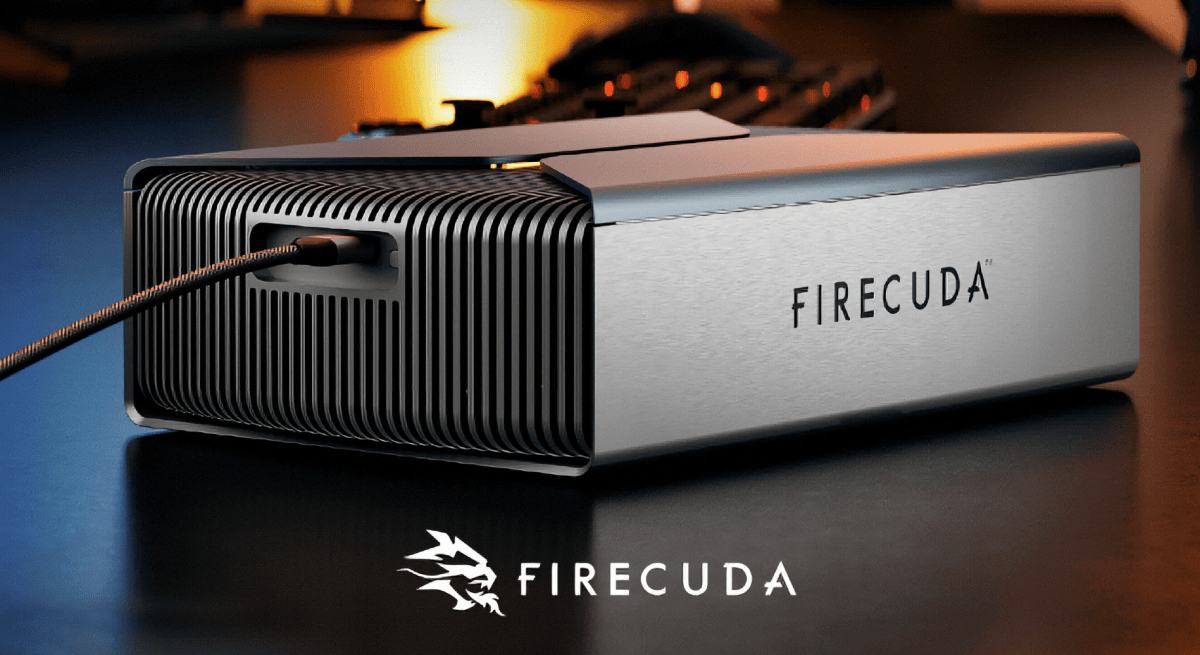
Seagate
The idea, however, is that Seagate’s hybrid drives deliver read and write performance somewhere between a super-pricy SSD and a somewhat less expensive hard drive. Seagate rates the Alkemi/FireCuda Forge as delivering 2,500MB/s read and 2,000MB/s write performance, two orders of magnitude higher than the 190MB/s transfer rate of a Seagate Barracuda 8TB hard drive, or the 210MB/s of a Seagate IronWolf ST8000VN0004.
Still, you’ll need to pay for it. PCPartPicker tracks the price of 8TB 3.5-inch SATA hard drives, and the average price is about $380 or so. Seagate’s 8TB FireCuda is $699…plus the $299 that Amazon charges for the 1TB SSD. You’re paying a premium for more performance, of course.
Seagate’s 8TB FireCuda Forge will end up at about $1,000 all in — but the performance difference between the generic hard drive and the Firecuda is substantial in the latter’s favor.
(Performance will vary depending upon where the data is pulled from; data stored on the outer tracks of a hard drive is read much faster than the inner tracks. Short, intermittent data reads also happen much more slowly than large sequential files.)
Seagate
Seagate’s FireCuda feels familiar
However the math works out, placing a fast cache against a slower storage drive is a technique that’s been used for years. Most hard drives already include some form of a DRAM cache, typically 256MB or so. This allows frequently accessed files to be recalled more quickly than if the PC has to seek the data out on the disk platter. SSDs also include DRAM cache to hold the mapping table, as well as allocating some of the flash as a write cache of sorts.
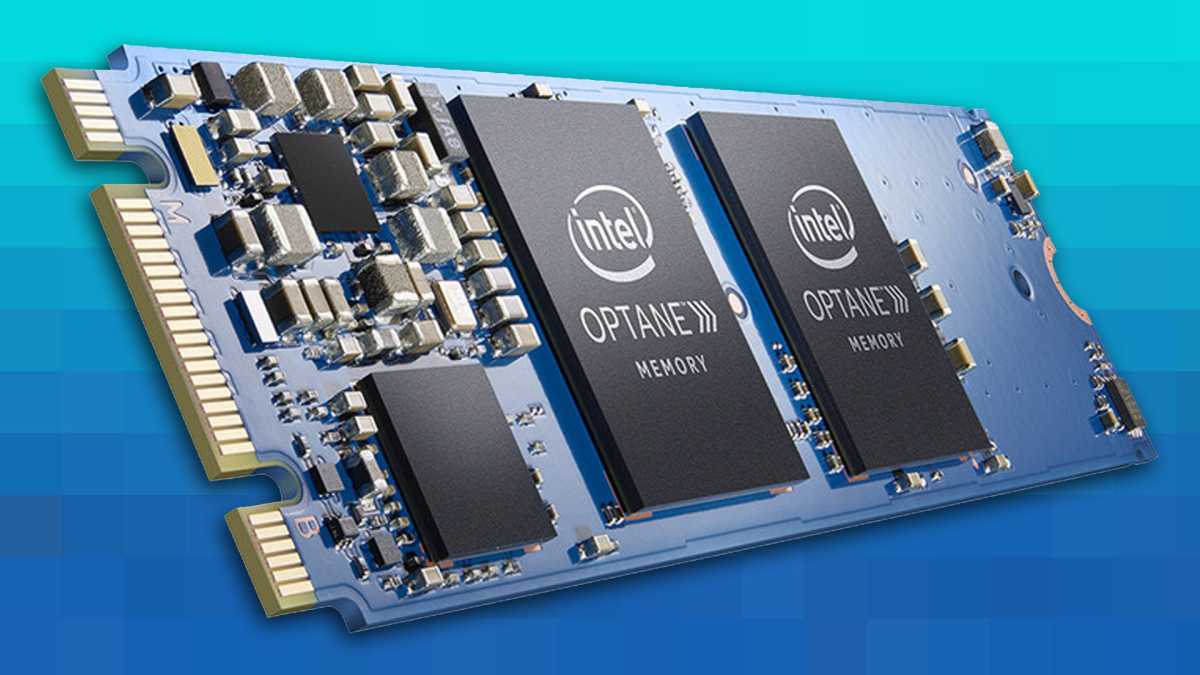
Content creators typically work with large video files, streamed to and from the storage medium. Intel’s Optane technology, for its part, was designed more for gamers, offering extensive endurance and excellent random-access performance. Intel killed its Optane SSDs in 2021, however, as PCIe 4 (and later PCI 5) SSDs replaced them.
Intel
The earlier Optane Memory did pretty much what Seagate’s Alkemi does: pairing quick XPoint memory with a rotating hard drive. Optane memories, however, were small — just 16GB to 32GB.
The difference for gamers will be in how well the Alkemi platform stores data. If a file or part of a file can be accessed from the SSD, the user should see the maximum-rated performance. If the file isn’t on the SSD, the PC will have to pull the file from the hard drive, meaning that you may have spent a lot of money on a solution that isn’t that impressive.
Content creators, however, will likely be loading, editing, and saving the same file or group of files, and that’s where the FireCuda Forge platform may pay off. It’s certainly a new twist in the ongoing storage wars.
This articles is written by : Fady Askharoun Samy Askharoun
All Rights Reserved to Amznusa www.amznusa.com
Why Amznusa?
AMZNUSA is a dynamic website that focuses on three primary categories: Technology, e-commerce and cryptocurrency news. It provides users with the latest updates and insights into online retail trends and the rapidly evolving world of digital currencies, helping visitors stay informed about both markets.
